Sri Lanka Military Releases Over 11 Acres of Land in Jaffna Amid Ongoing Concerns Over Vast Occupied Territory
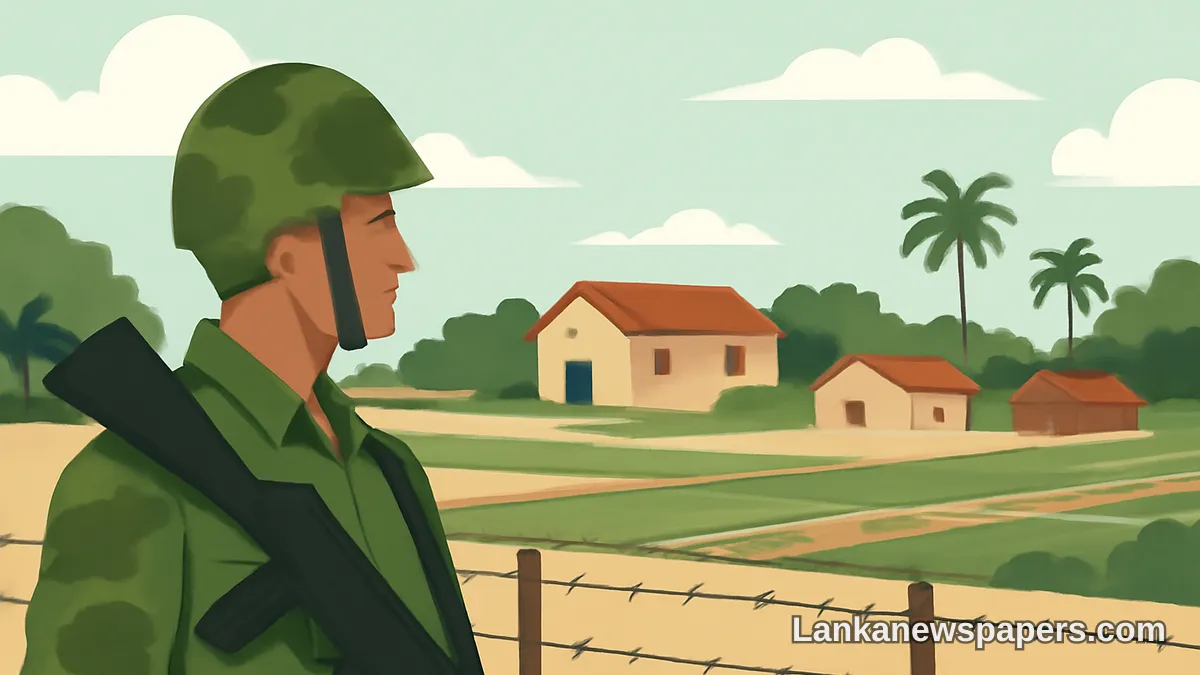
The Sri Lankan military has returned 11.23 acres of land in the Jaffna district to its rightful owners, a move that has been acknowledged as a modest step forward but has done little to ease frustration among Tamil communities who say thousands of acres across the Northern Province remain firmly in military hands.
A Small Release in a Long-Standing Dispute
The handover of the Jaffna land marks the latest in a series of gradual, piecemeal releases of territory that has been occupied by the military since the decades-long civil war between the Sri Lankan state and the Liberation Tigers of Tamil Eelam came to an end in 2009. While the return of any land to civilian ownership is welcomed, affected residents and Tamil civil society groups argue that the scale of the release falls far short of what is needed.
Families displaced during the war have waited for well over a decade to reclaim their ancestral properties, and many say the slow pace of land returns has made rebuilding their lives and livelihoods extremely difficult.
Thousands of Acres Still Under Military Control
Despite periodic releases of land, a significant portion of privately and communally owned territory in the North remains occupied by the armed forces. Critics point out that continued military presence on civilian land is not only an economic burden on displaced families but also serves as a visible reminder of wartime displacement that hampers genuine reconciliation efforts.
Community leaders and Tamil political representatives have repeatedly called on the government in Colombo to accelerate the process of returning occupied land, arguing that meaningful post-war reconciliation cannot take place while military camps and installations continue to sit on what was once family farmland, homes, and places of worship.
Government Position and Reconciliation Commitments
The Sri Lankan government has periodically reaffirmed its commitment to returning land to displaced civilians as part of broader reconciliation measures. However, advocacy groups note that progress has been inconsistent and that military authorities have at times been resistant to vacating strategically significant areas.
The issue of land occupation in the Northern and Eastern provinces has also drawn attention from international human rights organisations and foreign governments, who have urged Sri Lanka to demonstrate concrete progress on post-war accountability and the restoration of civilian rights.
Impact on Northern Communities
For many families in Jaffna and the surrounding areas, land is not simply property — it represents identity, heritage, and economic survival. Agriculture and fishing, both of which depend heavily on access to land and coastal areas, remain the primary sources of income for communities in the region. Continued occupation of farmland by the military has left many families unable to sustain themselves and dependent on outside assistance.
The return of 11.23 acres, while a positive development for the specific families who will benefit, is seen by many as symbolic rather than substantive given the enormity of what remains unresolved. Calls for a comprehensive, time-bound plan for full land release are expected to grow louder as affected communities and their representatives continue to press the government for action.

💬 Join the Discussion 2
See what readers are saying — and add your view.
11 acres out of thousands? This is just a PR stunt no
exactly, how many years they been saying "soon" already