Sri Lanka's Gender Quota Put Women in Parliament — But Did It Change Anything?
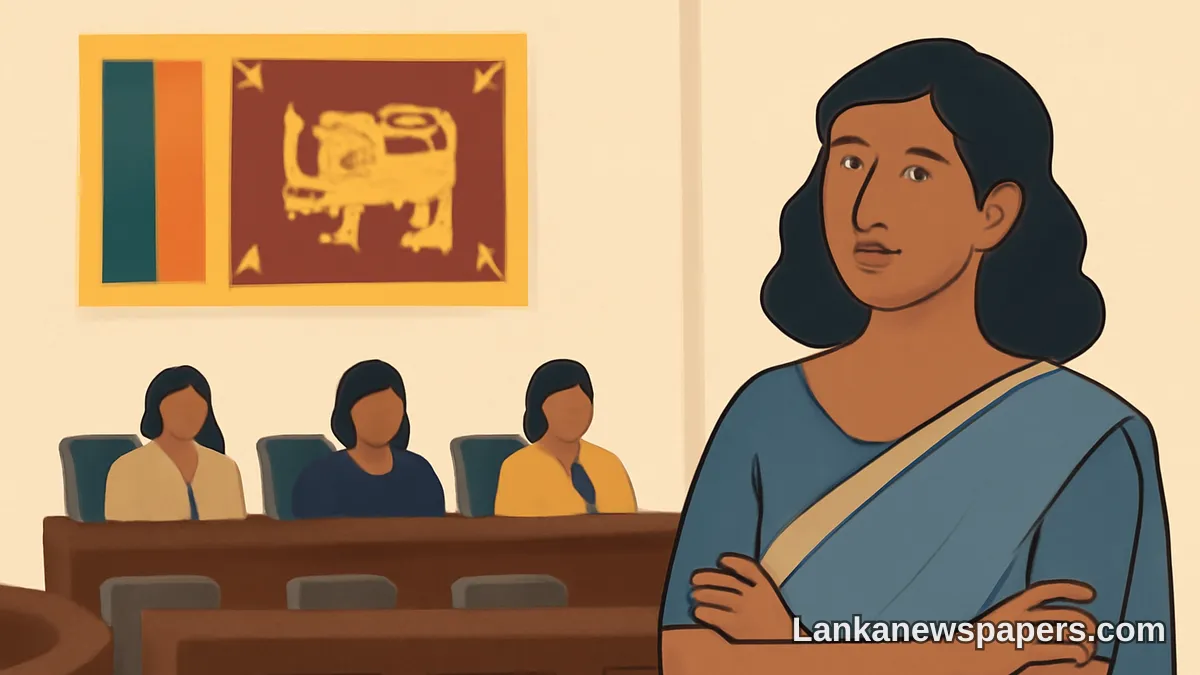
Sri Lanka's landmark gender quota legislation made history on paper, delivering a visible surge in female representation across local and national political bodies. But months after the numbers shifted, a deeper and more uncomfortable question lingers: has the system itself changed at all?
A Quota That Opened Doors — But Not Necessarily Power
The introduction of the gender quota was celebrated as a long-overdue corrective to one of South Asia's most male-dominated political cultures. Sri Lanka had, for decades, ranked poorly in global indices measuring women's political participation, and the quota was positioned as the structural intervention needed to break that pattern.
And in one narrow sense, it worked. Women now occupy seats they were previously locked out of. Their faces appear in council chambers and parliamentary halls that once reflected an almost exclusively male establishment.
Yet representation in numbers and representation in influence are two very different things. Critics and gender policy advocates argue that simply placing women inside a broken system does not repair it.
The Same Gatekeepers, Different Faces
Many of the women who entered politics through the quota mechanism did so under the patronage of male-dominated party hierarchies. They were selected, not self-determined — nominated by the same structures that had previously excluded them. This dynamic, observers note, has meant that a significant number of female politicians remain beholden to the very gatekeepers the quota was supposed to circumvent.
- Women candidates were often placed in lower-priority positions on party lists
- Access to campaign financing remained disproportionately controlled by male party officials
- Female politicians reported being sidelined in key decision-making meetings despite holding official positions
- Harassment and social stigma continued to deter independent women from seeking office
Structural Reform Versus Symbolic Progress
Gender equality advocates stress that a quota, while a necessary first step, is not a substitute for deeper institutional reform. Without changes to how parties are internally governed, how campaign funding is distributed, and how parliamentary culture operates on a day-to-day basis, the quota risks becoming a cosmetic adjustment rather than a genuine transformation.
Increasing the number of women in a room means little if the rules of that room were written entirely by and for men, and have never been revisited.
Sri Lanka's political culture carries entrenched traditions of family dynasties, patronage networks, and informal power arrangements that formal legislation alone cannot dismantle. Women entering this environment often find themselves navigating the same unwritten rules that have governed Sri Lankan politics for generations.
A Foundation, Not a Finish Line
There is, nonetheless, cautious optimism among those who see the quota as a foundation rather than a final answer. A generation of women is now gaining experience inside political institutions — experience that, over time, could produce a cohort capable of reshaping those institutions from within.
Younger female politicians, in particular, are increasingly vocal about demanding not just a seat at the table, but a say in how the table itself is arranged. Civil society organisations working on women's political empowerment argue that sustained pressure, mentorship programmes, and internal party reform will be essential to converting numerical gains into genuine power.
For Sri Lanka, the gender quota was a beginning — a necessary and meaningful one. But the harder work of transforming a political system built on exclusion has barely started. Changing the numbers was the easy part.



💬 Join the Discussion 0
Be the first to share your view on this story.