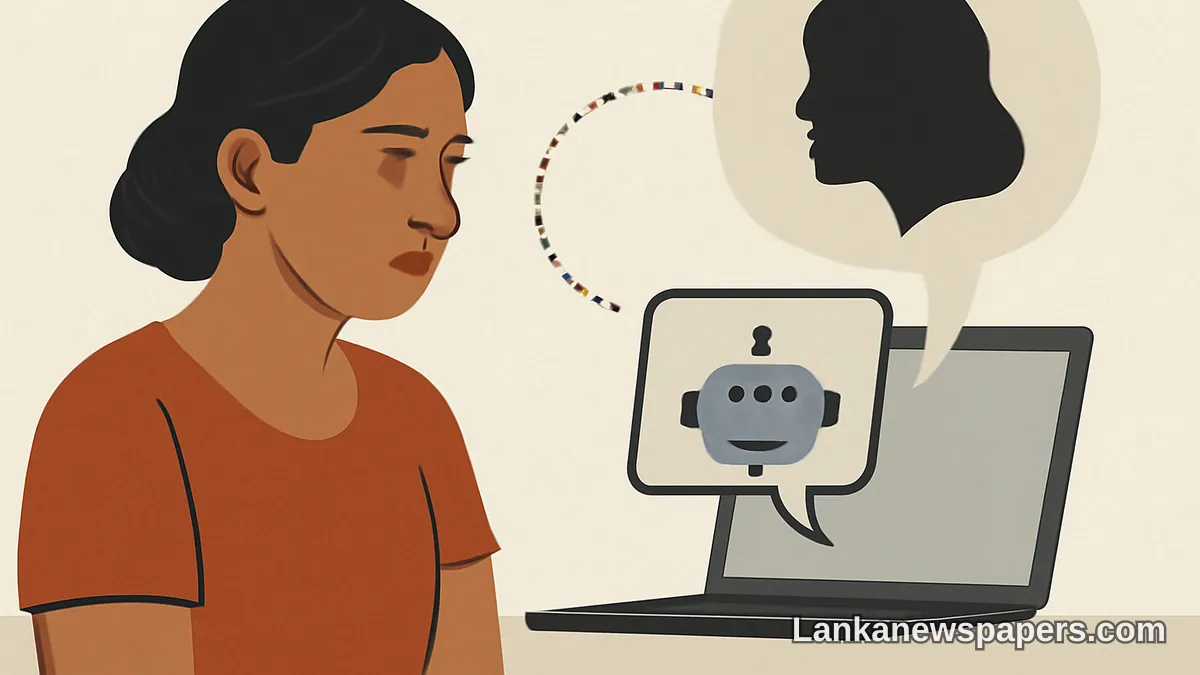
A Tamil woman's interaction with a Sri Lankan government-linked chatbot has sparked fresh concerns about digital discrimination and the treatment of ethnic minorities in the country's growing artificial intelligence infrastructure.
Abbi Kanthasamy, who identified herself as Tamil during an online exchange, found herself on the receiving end of what she described as a targeted and unsettling response from an AI-powered chatbot deployed by Sri Lankan authorities. The incident has drawn attention to the potential for algorithmic bias to reinforce existing ethnic tensions in a country still navigating the long aftermath of its civil war.
A Simple Declaration, An Unexpected Response
When Kanthasamy stated "I'm Tamil" during her interaction with the chatbot, she reported that the system's subsequent behaviour felt pointed and discriminatory rather than neutral and helpful. The experience raised immediate questions about how such automated systems are programmed, what data they are trained on, and whether they adequately account for Sri Lanka's complex and sensitive ethnic landscape.
Sri Lanka is home to several ethnic communities, with the Sinhalese majority and Tamil minority having historically navigated deep political and social divisions — divisions that culminated in a devastating decades-long armed conflict that ended in 2009. For many Tamils, particularly those in the north and east, interactions with state institutions continue to carry a weight of suspicion and anxiety.
Concerns Over Algorithmic Bias
Digital rights advocates and civil society organisations have long warned that artificial intelligence tools, if not carefully designed and audited, risk encoding the very biases present in the societies that produce them. In Sri Lanka's case, where ethnic identity remains a deeply politicised issue, the stakes are considered particularly high.
Critics argue that deploying chatbots and automated government services without proper safeguards for minority communities could amount to a new, technologically mediated form of discrimination — one that is harder to challenge precisely because it is obscured behind layers of code and automation.
The question is not merely whether a chatbot behaved poorly in one instance, but what systemic assumptions were built into its design from the very beginning.
Calls for Accountability and Transparency
Kanthasamy's account has prompted calls for the Sri Lankan government to be more transparent about how its digital tools are built, tested, and monitored for bias. Advocates are urging authorities to conduct independent audits of government-facing AI systems and to establish clear mechanisms through which citizens can report discriminatory experiences with automated platforms.
- Independent audits of government AI systems to assess potential ethnic or cultural bias
- Clear redress mechanisms for citizens who experience discrimination via automated services
- Inclusive design processes that involve minority community representatives
- Published guidelines on how chatbots are programmed to handle sensitive identity disclosures
The incident arrives at a time when Sri Lanka is actively expanding its digital governance infrastructure, with various ministries and public institutions increasingly turning to automated systems to manage citizen interactions and service delivery.
A Broader Conversation on Technology and Ethnic Identity
Kanthasamy's experience is being viewed by many observers not merely as an isolated technical glitch, but as a symptom of a broader failure to think carefully about how technology intersects with ethnicity, identity, and historical trauma in post-war Sri Lanka.
As the country continues to invest in digital transformation, the episode underscores the urgent need for policymakers to ensure that the promises of modern technology do not come at the expense of its most vulnerable citizens. For Sri Lanka's Tamil community in particular, trust in state institutions remains fragile — and incidents like this, however they are ultimately explained, do little to help rebuild it.
💬 Join the Discussion 4
See what readers are saying — and add your view.
this is embarrassing for the country honestly, tourists will see this
can we see the actual conversation before judging
goverment chatbot asking her ethnicity? what year is this, 1983?
exactly, like why does the bot even need to know that