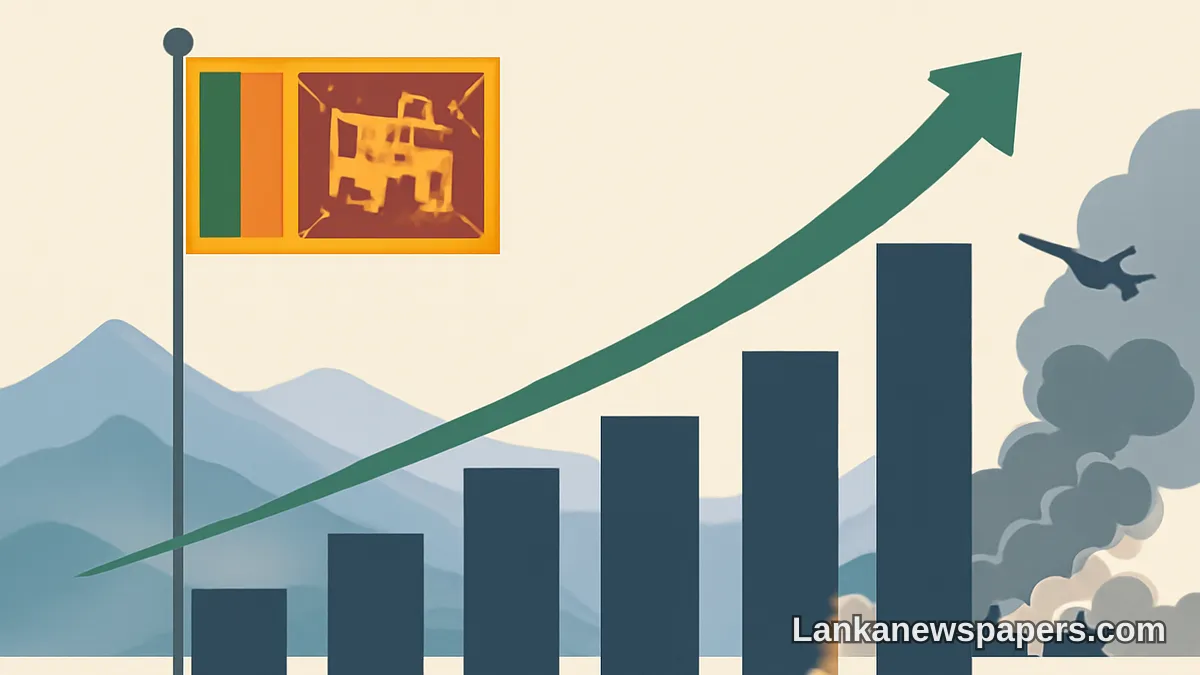
Sri Lanka's economy demonstrated resilience in the second quarter, expanding by 4.2 percent despite mounting pressures stemming from the conflict involving Iran, signalling a continued recovery trajectory for the island nation.
Steady Growth Amid External Headwinds
The 4.2 percent growth figure for the second quarter underscores Sri Lanka's ability to sustain economic momentum even as geopolitical tensions in the Middle East created headwinds for many developing economies across the region. The conflict involving Iran has contributed to global uncertainty, particularly around energy prices and shipping routes, factors that have weighed on import-dependent nations such as Sri Lanka.
Despite these challenges, the country's economic indicators pointed to a degree of stability that analysts and policymakers are likely to view as an encouraging sign following years of severe financial hardship.
Context of Recovery
Sri Lanka has been navigating a gradual but fragile economic recovery after its worst financial crisis in decades, which saw the country default on its external debt and face crippling shortages of fuel, medicine, and essential goods. The International Monetary Fund's bailout programme and ongoing debt restructuring efforts have formed the backbone of the country's stabilisation strategy.
The latest quarterly growth figures suggest that those measures are beginning to bear fruit, with the broader economy showing signs of expansion across key sectors.
Implications for Sri Lankan Households and Businesses
For ordinary Sri Lankans, sustained economic growth carries the promise of improved employment opportunities, greater business confidence, and a gradual easing of the cost-of-living pressures that have burdened households in recent years.
- Regional conflict continues to pose risks to global commodity and energy prices
- Sri Lanka's import bill remains sensitive to fluctuations in oil markets
- Continued IMF programme compliance is seen as critical to maintaining investor confidence
Economists caution, however, that the external environment remains unpredictable, and Sri Lanka's policymakers will need to remain vigilant in managing fiscal and monetary conditions to protect the gains made so far.
Sri Lanka's 4.2 percent second-quarter growth reflects a resilience that, while encouraging, must be carefully guarded against the volatility of an increasingly uncertain global landscape.
As the government and the Central Bank of Sri Lanka continue to monitor developments, the second-quarter performance nonetheless provides a measure of optimism for a nation that has endured extraordinary economic hardship in recent years.


💬 Join the Discussion 2
See what readers are saying — and add your view.
4.2% sounds good but my grocery bill says otherwise
exactly men, statistics and real life are two different things