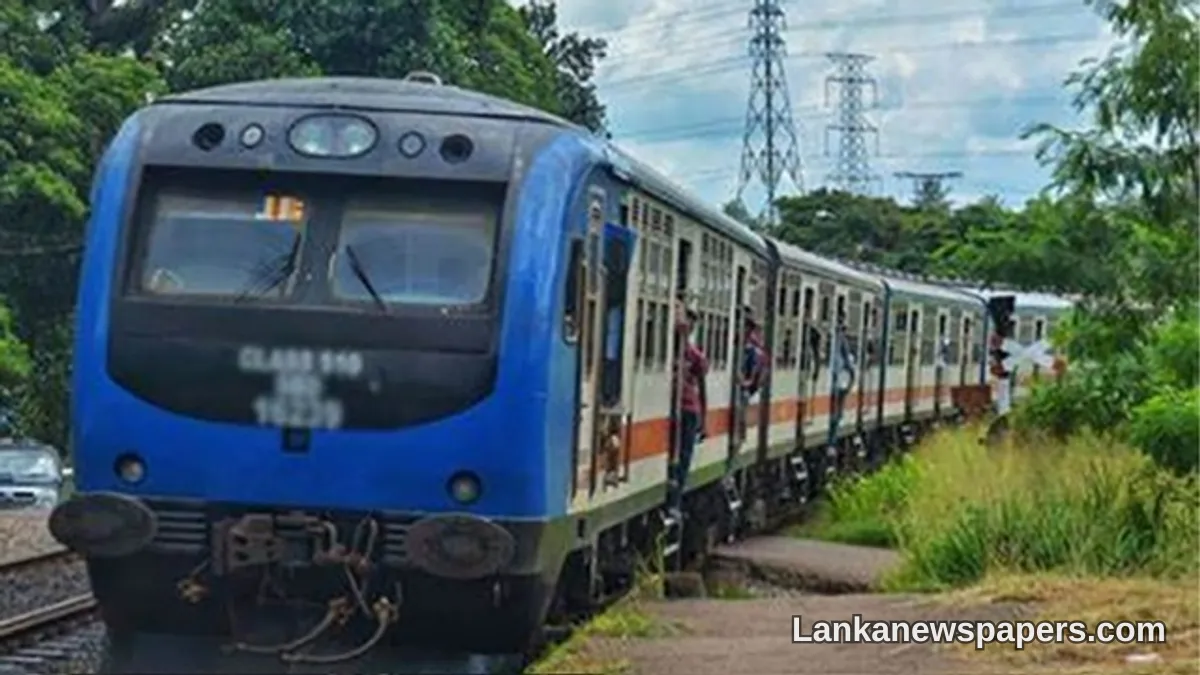
Operational Shortfall Raises Serious Concerns Over Rail Network Reliability
Sri Lanka's Railway Department is grappling with a severe operational crisis after an internal report confirmed that only 50 of the country's 98 train engines are currently in active service, leaving nearly half of the nation's locomotive fleet idle.
The revelation has drawn fresh scrutiny over the state of the island's rail infrastructure, which millions of commuters depend on daily for affordable and reliable transportation across the country.
What the Figures Reveal
According to the Railway Department report, the figures paint a troubling picture of an ageing and under-maintained fleet. With 48 engines either undergoing repairs, awaiting spare parts, or rendered unserviceable, the department is left managing a network stretched well beyond its practical capacity.
- Total engines in the national fleet: 98
- Engines currently in active service: 50
- Engines out of operation: 48
Impact on Daily Commuters
The shortage has had a direct and measurable impact on train schedules, with passengers across the country experiencing delays, cancellations, and overcrowding on a regular basis. Routes connecting Colombo to outstations have been particularly affected, placing added strain on an already burdened public transport system.
The department's own figures suggest that the operational capacity of Sri Lanka's railway network is running at just over 50 percent of its potential — a situation transport analysts have described as deeply unsustainable.
Calls for Urgent Action
The disclosure has intensified calls from transport unions, passenger advocacy groups, and opposition parliamentarians for the government to prioritise funding for locomotive repairs and procurement. Critics argue that years of deferred maintenance and budgetary neglect have brought the railway system to this critical juncture.
The Railway Department has yet to issue a formal public statement outlining a timeline for restoring the grounded engines to service or announcing emergency procurement measures to address the deficit.
Sri Lanka's railway network, which spans hundreds of kilometres of track connecting major towns and cities, remains a vital public service for both urban and rural communities. Transport observers warn that without immediate intervention, the operational situation is likely to deteriorate further in the months ahead.



💬 Join the Discussion 2
See what readers are saying — and add your view.
only 50 engines running for the whole country? no wonder trains always late
and they still increase the ticket prices no shame at all