Supreme Court Strikes Down Sirisena's Presidential Pardon for Gnanasara Thero as Unconstitutional
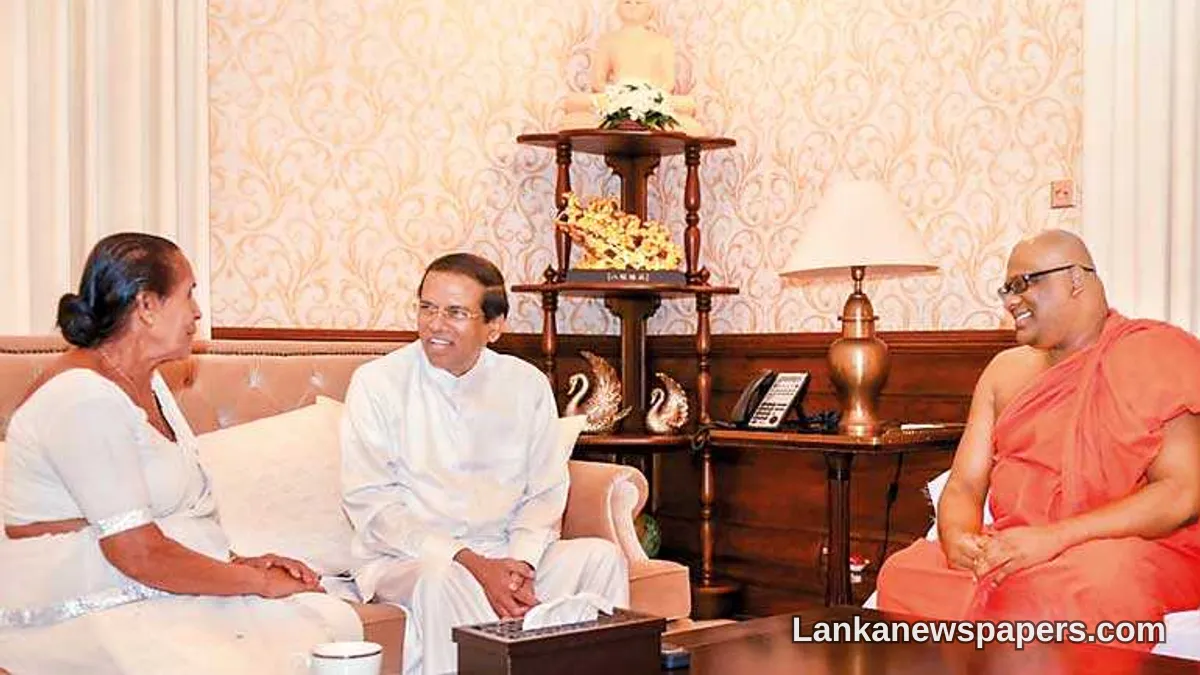
Landmark Ruling on Executive Powers
Sri Lanka's Supreme Court has delivered a landmark judgment declaring that the presidential pardon granted by former President Maithripala Sirisena to Bodu Bala Sena (BBS) General Secretary Ven. Galagoda Aththe Gnanasara Thero was invalid and unconstitutional.
Background to the Pardon
Gnanasara Thero had been serving a prison sentence following his conviction for contempt of court, a ruling stemming from his conduct during a highly publicised case that drew widespread attention both locally and internationally. Former President Sirisena controversially exercised his executive authority to grant a presidential pardon to the monk, allowing him to walk free before completing his sentence.
The pardon was met with sharp criticism from legal experts, civil society groups, and human rights organisations at the time, who questioned both its legal basis and its broader implications for the rule of law in Sri Lanka.
Supreme Court's Decision
In its ruling, the Supreme Court determined that the presidential pardon issued by Sirisena did not comply with the constitutional requirements governing the exercise of such executive powers. The court found the pardon to be legally flawed and therefore without valid effect.
The ruling represents one of the most significant judicial checks on presidential executive authority in recent Sri Lankan legal history.
Legal analysts have described the judgment as a defining moment for constitutional governance in the country, reinforcing that even the highest executive powers are subject to judicial scrutiny and must be exercised within the framework of the constitution.
Implications for Constitutional Governance
The decision is expected to set an important precedent regarding the limits of presidential pardons in Sri Lanka. Constitutional lawyers have noted that the ruling sends a clear message that executive authority cannot override judicial processes without adhering to proper legal safeguards.
- The Supreme Court declared the pardon granted by former President Sirisena unconstitutional.
- Gnanasara Thero had been convicted and sentenced for contempt of court prior to the pardon.
- The ruling is seen as a significant precedent limiting the unchecked use of presidential pardon powers.
- Civil society groups had long challenged the legitimacy of the pardon since it was issued.
The ruling has reignited public debate about the scope of executive power in Sri Lanka and the importance of maintaining an independent judiciary capable of holding all branches of government accountable under the law.



💬 Join the Discussion 3
See what readers are saying — and add your view.
Sirisena thought he can just pardon anyone he wants ah? Constitution doesnt work like that.
Finally the courts doing something right. About time honestly.
Took years though no? Why so late machan.