Sri Lanka's Chief Justice Faces Historic Conflict of Interest as He Prepares to Rule on Law Reshaping His Own Role
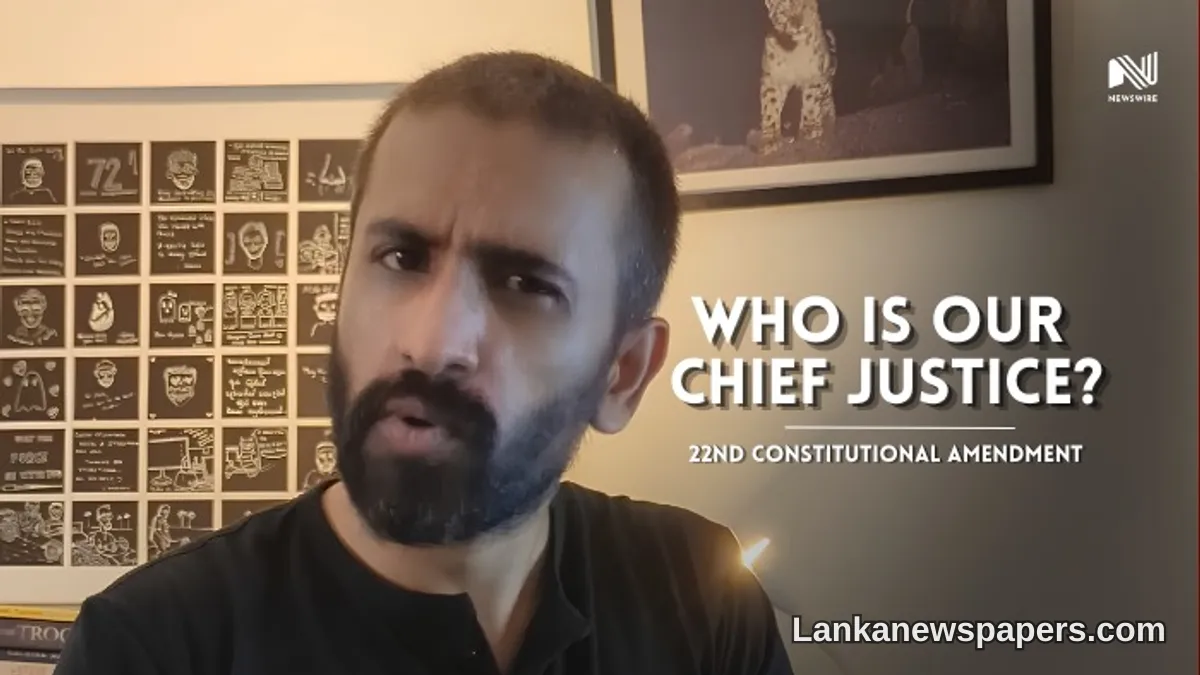
A Landmark Ruling With Personal Stakes
Sri Lanka's Chief Justice is at the centre of an unprecedented legal moment — one in which he is expected to deliver a ruling on legislation that directly affects the powers and nature of his own position. The situation has raised serious questions about judicial independence, institutional integrity, and the delicate balance of power within Sri Lanka's constitutional framework.
Who Is the Chief Justice?
The Chief Justice of Sri Lanka is the head of the country's highest court and the most senior figure within the national judiciary. The role carries enormous constitutional weight, with the Chief Justice presiding over the Supreme Court and holding authority on matters of fundamental rights, constitutional interpretation, and key appointments within the legal system.
The incumbent has served the judiciary across several decades, building a reputation as a legal professional steeped in the traditions of Sri Lankan constitutional law. His ascent to the apex of the judicial hierarchy came after years of service across different tiers of the court system, earning recognition for his depth of legal knowledge and institutional experience.
The Law at the Heart of the Controversy
The legislation now before the Supreme Court proposes significant changes to the structure and functioning of the Chief Justice's role itself. Critics and legal scholars have pointed out the inherent awkwardness — and potential impropriety — of allowing a sitting Chief Justice to adjudicate on a matter that reshapes the very office he occupies.
Such a scenario raises fundamental questions that go to the heart of judicial ethics:
- Can a judge be truly impartial when ruling on a matter that affects his own position and authority?
- What safeguards exist within Sri Lanka's legal system to address such conflicts of interest?
- Does the outcome of such a ruling carry legitimate constitutional authority in the eyes of the public and legal community?
Voices From the Legal Community
The principle that no person should be a judge in their own cause is one of the oldest and most fundamental tenets of justice. This situation puts that principle under extraordinary strain.
Legal analysts across the country have echoed similar sentiments, with many calling for greater transparency in how the court intends to handle the perceived conflict. Some have suggested that a mechanism for recusal or the constitution of a special bench could offer a path forward that preserves public confidence in the judiciary.
Broader Implications for Sri Lanka's Democracy
Sri Lanka has witnessed numerous constitutional and judicial controversies over the past several decades, including the contentious impeachment of a former Chief Justice that drew widespread domestic and international criticism. Against that backdrop, the current situation carries particular sensitivity.
Observers note that how this matter is handled will send a strong signal — either reinforcing or undermining public trust in the independence of the judiciary at a time when Sri Lanka is still navigating the aftermath of its worst economic crisis and working to rebuild democratic institutions.
The ruling, when it comes, is expected to have far-reaching consequences not only for the office of the Chief Justice but for the broader question of how Sri Lanka manages the intersection of political power and judicial authority.


💬 Join the Discussion 4
See what readers are saying — and add your view.
who appointed this man anyway, thats the real question
goverment should have got someone else to handle this case la
how can he judge a law that changes his own position? serious conflict no?
exactly, even school kids know you cant mark your own exam