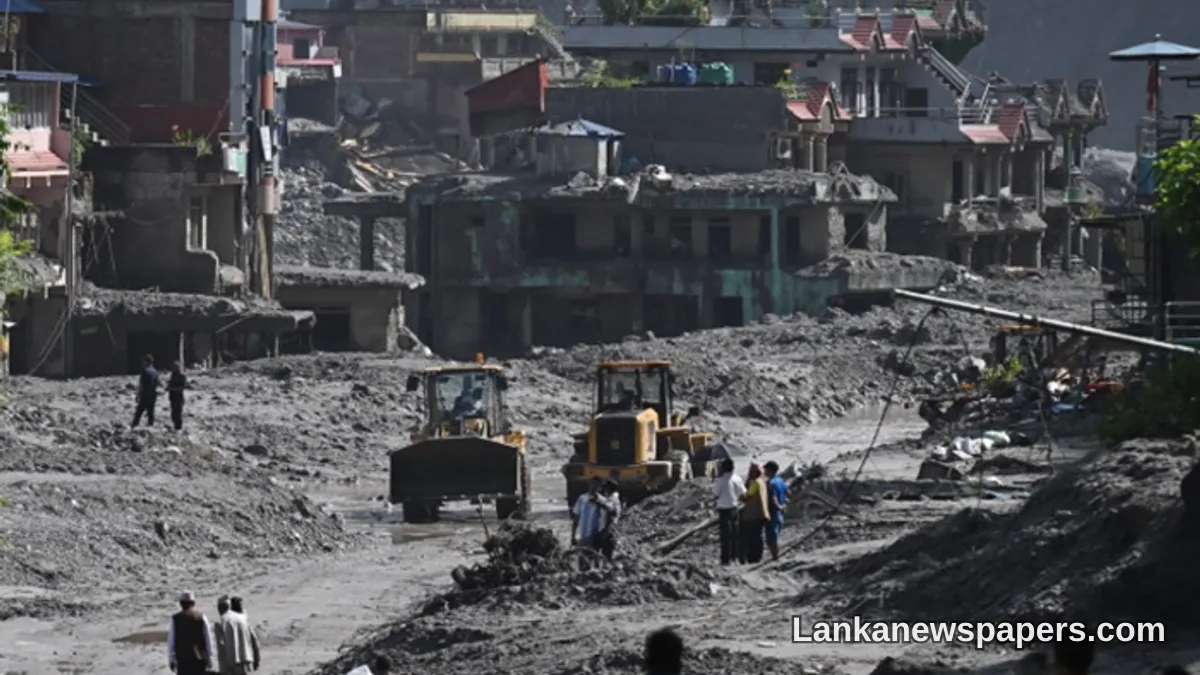
Rescue teams in Nepal and Tibet continued their desperate search through thick mud and debris on Monday, marking a sixth consecutive day of operations following a devastating glacial flood that has now claimed more than 900 lives across both regions.
Mounting Casualties and Missing Persons
The death toll from the catastrophic flooding has surpassed 900, with authorities reporting that the number of people still unaccounted for has soared significantly, compounding fears that the final casualty figure could rise further as search efforts press on.
Rescue workers have faced extreme challenges navigating the aftermath of the disaster, with vast stretches of land buried under layers of mud, rock, and debris swept down by the powerful floodwaters. The conditions have severely hampered efforts to locate survivors and recover the bodies of victims.
A Region Overwhelmed
Glacial floods, also known as glacial lake outburst floods, occur when water held within or beside a glacier is suddenly released, sending massive torrents downstream with little warning. Communities in the high-altitude regions of Nepal and Tibet are particularly vulnerable to such events, often with limited time or infrastructure to respond.
- Rescue operations have been ongoing for six days since the flood struck
- The death toll has exceeded 900 across Nepal and Tibet
- The number of missing persons continues to rise
- Mud and debris have severely obstructed search and recovery efforts
Global Concerns Over Glacial Hazards
The disaster has renewed urgent international attention on the growing threat posed by glacial lake outburst floods in the Himalayan region, an area that scientists have long identified as increasingly at risk due to accelerating glacial melt linked to climate change.
Experts warn that as global temperatures continue to rise, the frequency and severity of glacial flood events across South Asia and the broader Himalayan belt are expected to increase, placing millions of people in vulnerable mountain communities at greater risk.
Authorities in both Nepal and Tibet have appealed for continued support as rescue teams work around the clock to reach affected communities. The full scale of destruction to infrastructure, homes, and livelihoods is still being assessed, with relief operations expected to continue for an extended period.



💬 Join the Discussion 4
See what readers are saying — and add your view.
our goverment should take note. we also have disaster risks here dont forget.
climate change is doing this. these glaciers melting is not normal anymore.
900 lives gone just like that. so sad for those families men.
and still counting no. the missing number is even more scary.