Sri Lanka Flagged Under 'Elevated Concern' as Climate Risks and Energy Costs Threaten Food Security Ahead of Maha Season
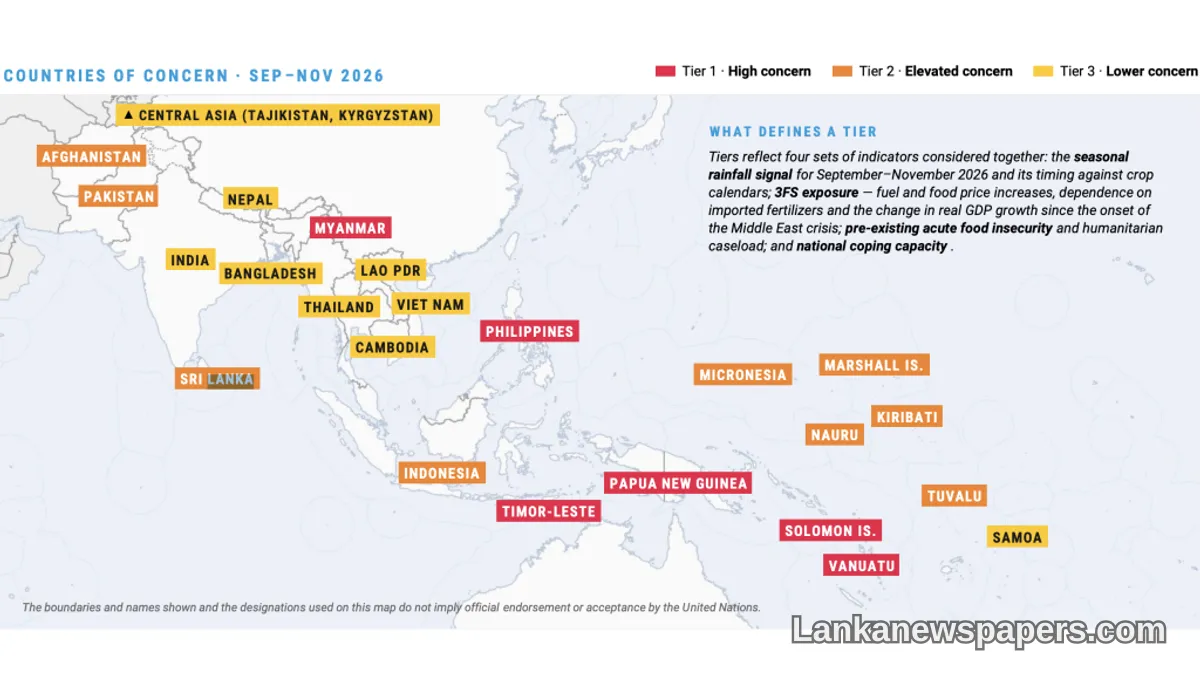
UN Report Raises Alarm Over Sri Lanka's Compounding Vulnerabilities
Sri Lanka has been placed under an "Elevated Concern" classification — Tier 2 — in a joint Asia-Pacific risk assessment released by United Nations agencies and international climate monitoring bodies, signalling growing anxiety over the island's ability to withstand a dangerous convergence of climate shocks and persistent energy-driven cost pressures.
Timing Raises Stakes Ahead of Critical Maha Season
The warning carries particular weight given its timing. The Maha cultivation season, which represents one of Sri Lanka's two major agricultural cycles and is vital to national food production, is approaching — a period during which climate disruptions and rising input costs can have outsized consequences for farmers and consumers alike.
The FAO-linked assessment highlights how intensifying climate anomalies are colliding with unresolved economic stressors, creating a compounded risk environment that authorities and agricultural communities are ill-equipped to absorb without targeted intervention.
Climate Anomalies Add to an Already Fragile Situation
According to the report, Sri Lanka is contending with increasingly erratic weather patterns that threaten crop yields, water availability, and rural livelihoods. These climate-related pressures are being layered on top of energy cost burdens that continue to drive up the price of agricultural inputs such as fuel for irrigation, transportation, and food processing.
- Intensifying climate anomalies affecting agricultural stability
- Energy-driven inflation pushing up production and food costs
- Heightened food security risks concentrated in vulnerable rural communities
- The approaching Maha season amplifying the urgency of the situation
A Call for Urgent Policy Attention
The Tier 2 designation stops short of the most critical emergency classification but serves as a formal signal to governments and humanitarian agencies that proactive measures are needed before conditions deteriorate further. For Sri Lanka, which is still navigating the aftermath of its worst economic crisis in decades, the classification underscores the fragility of any recovery gains made thus far.
Sri Lanka's placement under Elevated Concern reflects a situation where multiple risk factors are reinforcing one another, leaving little room for complacency as the agricultural season draws near.
Food security analysts and development organisations are expected to use the assessment to prioritise resource allocation and early warning responses across the Asia-Pacific region, with Sri Lanka identified as one of the countries warranting close monitoring in the months ahead.



💬 Join the Discussion 1
See what readers are saying — and add your view.
Every year same story, nothing changes on the ground level