Chemmani Mass Graves: Calls Grow for Justice in Sri Lanka's North as Families Await Answers
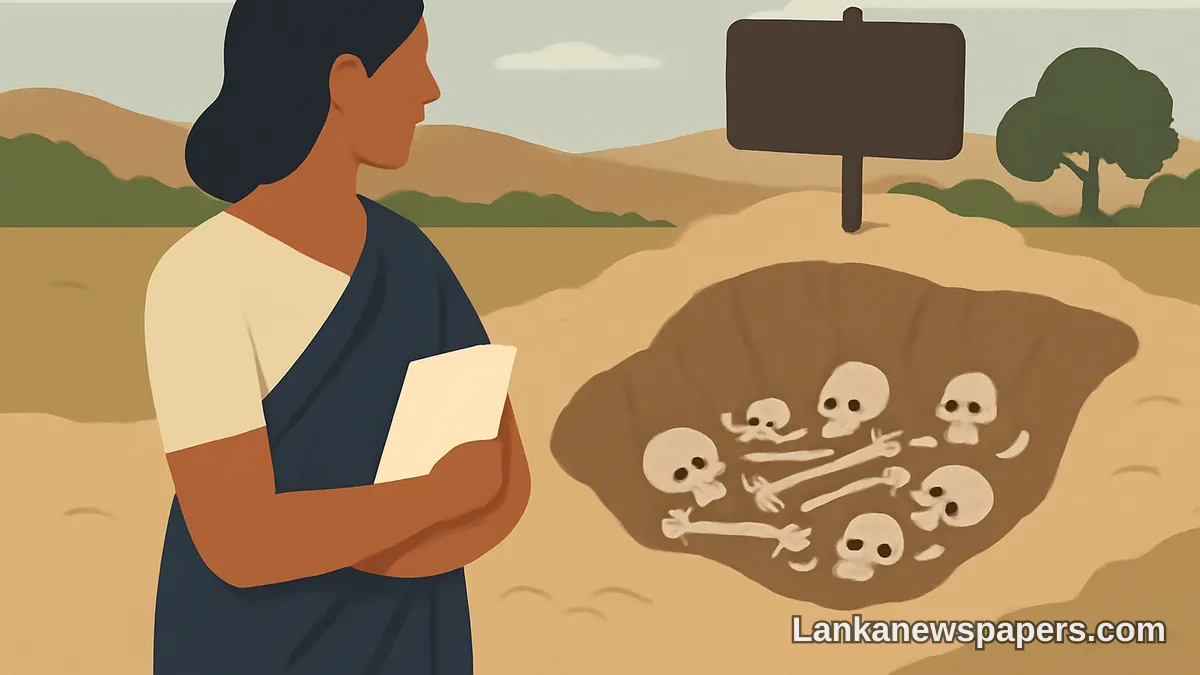
Decades after the end of Sri Lanka's devastating civil war, the mass graves at Chemmani in the Northern Province continue to stand as one of the country's most painful and unresolved chapters, with renewed calls emerging for the government to take meaningful action on the matter.
A Site That Has Never Been Forgotten
Chemmani, located on the outskirts of Jaffna, has long been associated with mass burial sites believed to contain the remains of Tamil civilians and combatants who perished during the conflict. The graves were first brought to wider attention in the late 1990s, when a former soldier testified that bodies had been buried at the location. Despite initial excavations, the full extent of what lies beneath the ground has never been conclusively established.
For the families of the disappeared, Chemmani is more than a historical footnote. It represents unanswered questions about the fate of their loved ones — questions that have persisted through successive governments and numerous unfulfilled promises of accountability.
Pressure Mounts for Government Action
Advocacy groups and representatives of Tamil communities are intensifying pressure on the Sri Lankan government to conduct thorough, transparent, and forensically rigorous investigations at the site. They argue that without proper excavation and identification processes, justice for the victims remains impossible.
The Chemmani graves are a symbol of the broader failure to address wartime accountability in Sri Lanka. Families deserve closure, and the state has an obligation to provide it.
Critics have pointed out that progress on transitional justice mechanisms in Sri Lanka has been frustratingly slow, with international human rights bodies repeatedly urging Colombo to honour its commitments on accountability for wartime atrocities.
The Broader Context of Transitional Justice
Sri Lanka's civil war, which lasted nearly three decades and ended in May 2009, resulted in tens of thousands of deaths and disappearances. The Tamil-majority Northern Province bore some of the heaviest losses during the final stages of the conflict, and communities there continue to seek recognition, truth, and reparations.
- Thousands of families across the north and east remain uncertain about the fate of relatives who disappeared during the war.
- International bodies, including United Nations human rights mechanisms, have called for independent investigations into alleged wartime crimes.
- Sri Lanka's own Office on Missing Persons was established to address disappearance cases, but its effectiveness has been questioned by victim groups.
What Needs to Happen Next
Campaigners are urging the government to deploy forensic experts, engage international partners where necessary, and ensure that any remains discovered at Chemmani and similar sites are identified and returned to families with dignity. They also stress the importance of legal accountability for those responsible for any unlawful killings.
For Sri Lanka to move toward genuine reconciliation, observers say, confronting the truth about sites like Chemmani is not optional — it is essential. The silence surrounding these graves has lasted long enough, and for the families still waiting, every passing year without answers is a continuation of their suffering.

💬 Join the Discussion 4
See what readers are saying — and add your view.
Why only now ppl are talking about this? Where were they before?
These families deserve closure at least. cant imagine the pain.
30 years later and still no answers. goverment must act now.
Which goverment? Both sides been ignoring this for decades no.