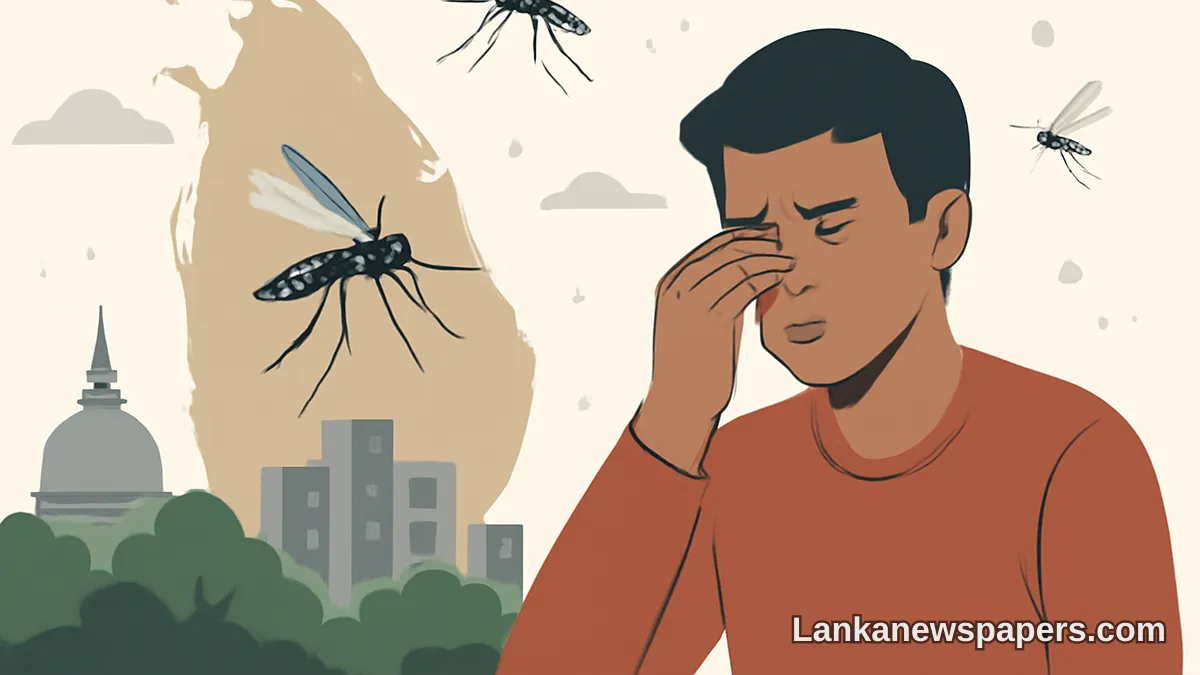
Sri Lanka is grappling with a worsening dengue situation, with the National Dengue Control Unit (NDCU) reporting 88,088 confirmed cases and 63 deaths recorded across the country so far this year.
Rising Toll Raises Public Health Concerns
The latest figures released by the NDCU paint a troubling picture of the mosquito-borne illness's continued spread throughout the island. Health authorities have confirmed that the country's dengue case fatality rate currently stands at 0.07 percent, reflecting the scale of infections relative to the number of lives lost.
Dengue fever, transmitted through the bite of the Aedes aegypti mosquito, remains one of Sri Lanka's most persistent public health challenges, with cases typically spiking during and after periods of heavy rainfall when stagnant water provides ideal breeding conditions for mosquitoes.
What the Public Should Know
Health officials continue to urge the public to take preventive measures to curb the further spread of the disease. Key steps recommended by authorities include:
- Eliminating stagnant water around homes, including in flowerpots, tyres, and water containers
- Using mosquito repellents and wearing protective clothing
- Seeking immediate medical attention if symptoms such as high fever, severe headache, or body pain develop
- Cooperating with public health inspectors conducting routine inspections
The NDCU has confirmed the case fatality rate stands at 0.07 percent, though health officials stress that every preventable death underscores the need for stronger community action.
With dengue cases continuing to climb, health authorities are calling on local government bodies, communities, and individuals to intensify their efforts in eliminating mosquito breeding sites before the situation deteriorates further.


💬 Join the Discussion 3
See what readers are saying — and add your view.
my whole street got dengue last month, this is not surprising at all
88,000 cases and goverment still acting like everything is fine
exactly, every year same story, no action