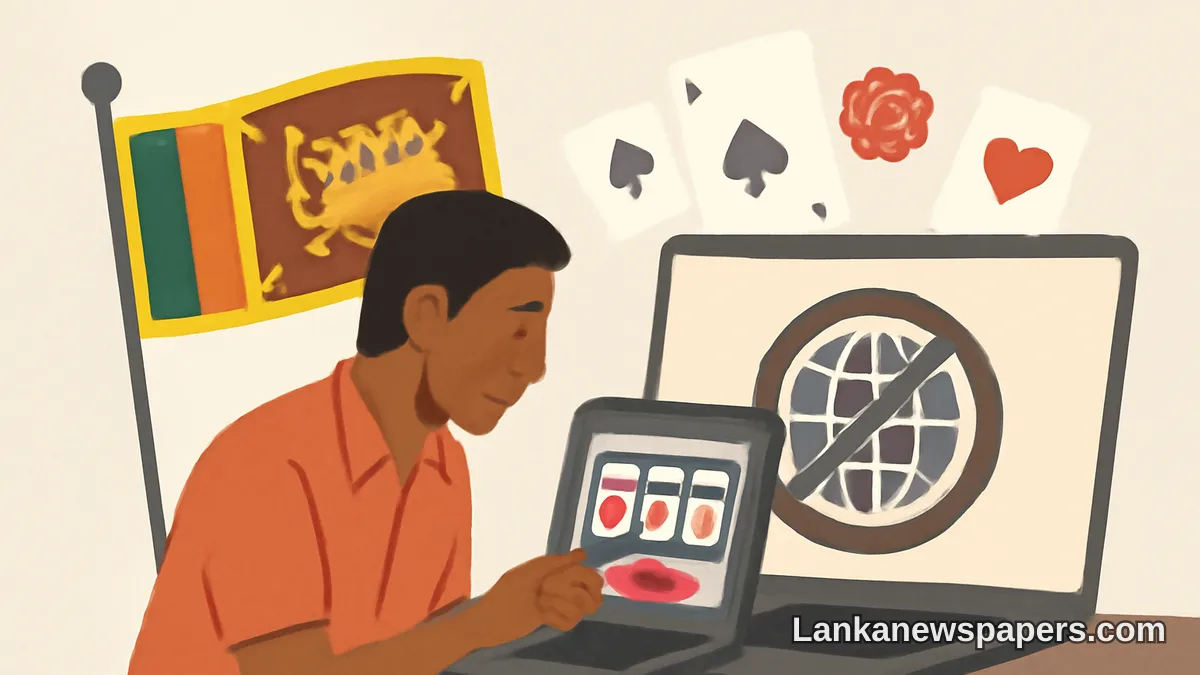
As Sri Lanka grapples with the rapid growth of online gambling, authorities have turned to website blocking as their primary weapon against the industry. However, experts and observers warn that this approach alone is fundamentally insufficient to address the scale and sophistication of the problem.
The Limits of Website Blocking
Blocking access to gambling websites may appear to be a straightforward solution, but in practice it does little to deter determined users. Technologically savvy gamblers can easily bypass restrictions using Virtual Private Networks, or VPNs, proxy servers, and mirror sites — tools that are widely available and simple to use even for those with limited technical knowledge.
The moment authorities block one platform, operators swiftly redirect their user base to alternative domains, rendering the ban largely symbolic. This cat-and-mouse dynamic has played out in numerous countries that have attempted similar crackdowns, with minimal long-term effect on actual gambling activity.
A Market That Has Outgrown Traditional Controls
Sri Lanka's online gambling market has expanded dramatically in recent years, fuelled by widespread smartphone penetration, affordable mobile data, and an increasingly digitally connected population. Gambling platforms — many of them operated from overseas jurisdictions — have aggressively targeted Sri Lankan users through social media advertising, influencer promotions, and localised payment options including popular mobile wallets.
The cross-border nature of these operations makes regulation significantly more complex. Because many platforms are registered and licensed in foreign countries, Sri Lankan regulators have limited direct legal authority over them, making enforcement a persistent challenge.
The Financial Trail
Another critical dimension that website blocks fail to address is the flow of money. Online gambling transactions in Sri Lanka frequently move through informal payment channels, cryptocurrency, and third-party payment processors that are difficult to monitor and intercept. Without targeted financial regulation and coordination with banking institutions, the economic activity underpinning the industry continues largely uninterrupted even when access to specific sites is restricted.
What Experts Say Is Needed
Analysts argue that a comprehensive, multi-pronged strategy is essential if Sri Lanka is serious about curbing online gambling. Key recommendations include:
- Introducing clear and enforceable legislation specifically targeting online gambling operations and their payment ecosystems
- Strengthening coordination between telecommunications regulators, financial institutions, and law enforcement agencies
- Engaging in international cooperation to pursue operators based in overseas jurisdictions
- Investing in public awareness and education campaigns to address problem gambling at the community level
- Establishing accessible support services for individuals affected by gambling addiction
A Public Health Dimension
Beyond the regulatory and financial challenges, there is a growing recognition that online gambling carries serious social and public health consequences. Reports of individuals — particularly young men — falling into significant debt as a result of gambling losses have raised alarm among social workers and mental health professionals across the island.
Treating online gambling purely as a law enforcement problem ignores the deeper social vulnerabilities that drive people toward these platforms in the first place.
Without addressing the demand side of the equation through education, mental health support, and economic opportunity, supply-side measures such as website blocks are unlikely to produce meaningful change.
The Road Ahead
Sri Lanka is not alone in wrestling with these challenges — governments across South and Southeast Asia have encountered similar difficulties in regulating the online gambling industry. The common lesson emerging from those experiences is that reactive, piecemeal interventions consistently fall short.
For Sri Lanka to make genuine progress, policymakers will need to move beyond the relative simplicity of website blocking and commit to a sustained, coordinated, and evidence-based approach that addresses the issue from multiple angles simultaneously.



💬 Join the Discussion 2
See what readers are saying — and add your view.
VPN use pannala 2 minutes. Ban is useless.
Exactly, my cousin bypasses it daily no problem.