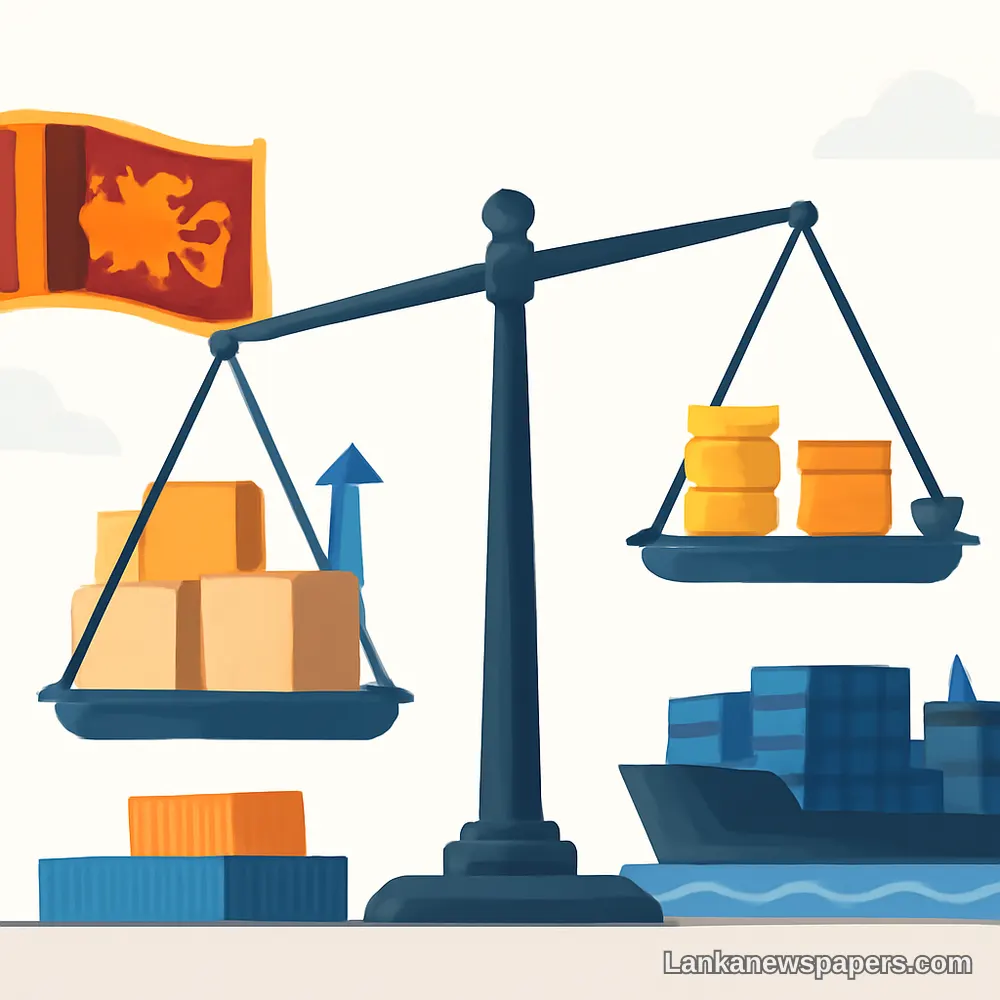
Gap Between Imports and Exports Grows Wider
Sri Lanka's trade deficit widened during the month of June, with the value of goods imported into the country continuing to outstrip export earnings, the latest trade data has revealed.
The expansion of the trade deficit signals that Sri Lanka is spending more on foreign goods than it is generating through its export sector, a trend that places continued pressure on the island nation's external accounts and foreign exchange reserves.
Implications for the Economy
A widening trade deficit can carry significant consequences for a country still navigating its way through economic recovery. For Sri Lanka, which experienced a devastating foreign exchange crisis in recent years, managing the balance between imports and exports remains a critical priority for policymakers and the Central Bank.
Economists have long warned that sustained trade imbalances can erode currency stability and complicate efforts to rebuild foreign reserves, both of which are central to Sri Lanka's ongoing economic stabilisation programme.
Export and Import Dynamics
While detailed sector-by-sector figures are yet to be fully assessed, the June data points to a situation where import demand — driven by energy, consumer goods, and industrial inputs — has picked up at a pace that outperforms growth on the export side.
Sri Lanka's key export sectors, including apparel, tea, rubber, and tourism-related services, will need to demonstrate stronger performance in the coming months if the trade gap is to be narrowed meaningfully.
What to Watch Going Forward
Analysts and trade observers will be closely monitoring the following factors in the months ahead:
- The trajectory of global commodity prices, particularly oil, which heavily influences Sri Lanka's import bill
- Demand conditions in key export markets, including the European Union and the United States
- Government and Central Bank policy responses aimed at encouraging export growth and managing import expenditure
- The performance of the Sri Lankan rupee against major trading currencies
The June trade figures serve as a reminder that while Sri Lanka has made notable progress in stabilising its economy following the 2022 crisis, the road to sustained recovery remains challenging and will require continued vigilance on the trade and external balance fronts.



💬 Join the Discussion 1
See what readers are saying — and add your view.
every month same story, imports up exports down, nothing changes