Decades of Decay: How Sri Lanka's Judiciary Has Been Undermined Since the 1978 Constitution
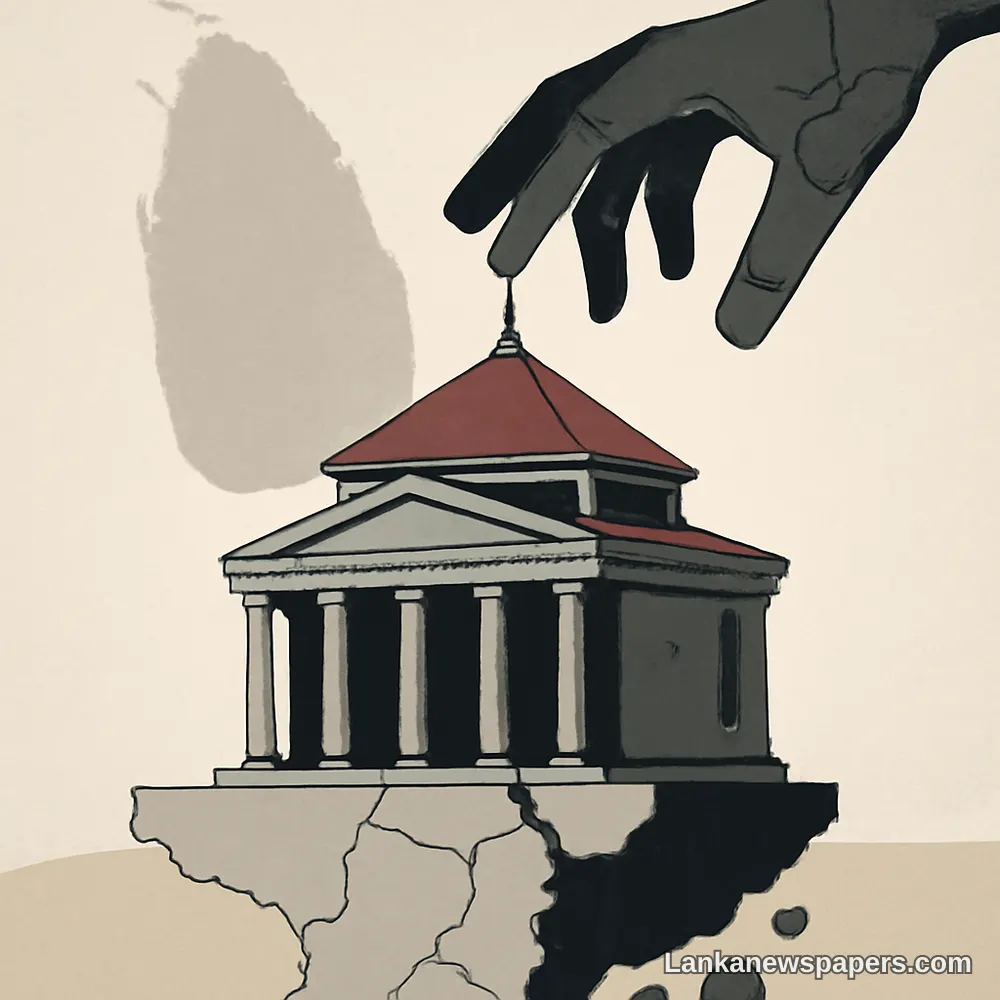
A System Built to Serve Power
Sri Lanka's judiciary has long been regarded as one of the cornerstones of democratic governance — a body entrusted with upholding the rule of law and protecting citizens from the excesses of the state. Yet for nearly five decades, critics and legal scholars argue that the independence of that very institution has been systematically eroded, beginning with the landmark constitutional overhaul of 1978.
The 1978 Constitution and the Seeds of Judicial Decline
When J.R. Jayewardene introduced the executive presidential system through the 1978 Constitution, it fundamentally altered the balance of power in Sri Lanka. Critics contend that this new constitutional framework concentrated authority in the hands of the executive to a degree that left other institutions — including the courts — increasingly vulnerable to political pressure.
The appointment of senior judges, including those of the Supreme Court and the Court of Appeal, was placed largely within the gift of the executive, creating a structural dynamic that many legal observers argue made true judicial independence difficult to sustain.
Political Interference: A Recurring Theme
Over the years, a pattern of political interference in judicial affairs has been documented by lawyers, civil society groups, and international observers alike. From the controversial impeachment of Chief Justice Shirani Bandaranayake in 2013 — a process widely condemned as unconstitutional and politically motivated — to persistent allegations of executive influence over judicial appointments, the judiciary has repeatedly found itself at the centre of political storms.
The Bandaranayake episode in particular drew sharp international criticism. The United Kingdom, the United States, and several Commonwealth bodies expressed serious concern over the manner in which Parliament, under the direction of the executive, removed the country's first female Chief Justice following a ruling seen as unfavourable to the government of the day.
Structural Weaknesses and Institutional Rot
Beyond high-profile incidents, legal reformers point to deeper structural problems within the judicial system that have accumulated over decades. These include:
- Chronic delays in case proceedings, with some matters languishing in courts for years or even decades before resolution
- Inadequate resources and infrastructure within the court system, undermining efficiency and accessibility
- A judicial appointments process that lacks sufficient transparency and independent oversight
- Limited mechanisms for holding judges accountable in cases of misconduct or corruption
- The chilling effect of executive power on judicial decision-making, particularly in cases involving the state
The Bar Association Speaks Out
Sri Lanka's Bar Association has over the years raised alarms about the state of the judiciary, calling on successive governments to implement meaningful reforms. Legal professionals argue that without a truly independent judiciary, citizens have no reliable recourse against abuses of state power — a situation they describe as fundamentally incompatible with a functioning democracy.
Without judicial independence, the entire architecture of constitutional rights becomes meaningless. Citizens are left without a credible referee when the state oversteps its boundaries.
Reform Promises That Rarely Materialise
Every major political party in Sri Lanka has, at one time or another, promised judicial reform. Constitutional amendments have been proposed, debated, and occasionally passed — yet experts argue that the fundamental problem of executive dominance over judicial appointments and the broader legal system has never been adequately addressed.
The 19th Amendment to the Constitution, passed in 2015, was seen as a partial step forward, introducing the Constitutional Council to provide a degree of independent oversight over key appointments. However, subsequent political developments, including the passage of the 20th Amendment in 2020, were widely viewed as reversing many of those gains and reasserting executive supremacy.
A Crisis of Public Trust
Perhaps the most damaging consequence of decades of judicial vulnerability is the erosion of public trust. Surveys and anecdotal evidence alike suggest that a significant portion of Sri Lankans have lost faith in the courts as impartial arbiters of justice — a perception that, once entrenched, is extraordinarily difficult to reverse.
Legal scholars warn that a judiciary perceived as an instrument of whoever holds executive power is not merely a democratic failure — it is a practical danger to every citizen who may one day need to seek justice against the powerful.
The Road Ahead
As Sri Lanka continues its efforts to recover from its worst economic crisis in modern history and rebuild democratic institutions, many argue that genuine judicial reform must be placed at the top of the national agenda. This would require, at minimum, a transparent and independent appointments process, security of tenure for judges free from executive interference, and adequate resourcing of the court system to address the backlog of cases.
Whether the political will exists to undertake such reform remains, as it has for nearly fifty years, the critical unanswered question.



💬 Join the Discussion 1
See what readers are saying — and add your view.
1978 constitution was a disaster from day one, still paying the price