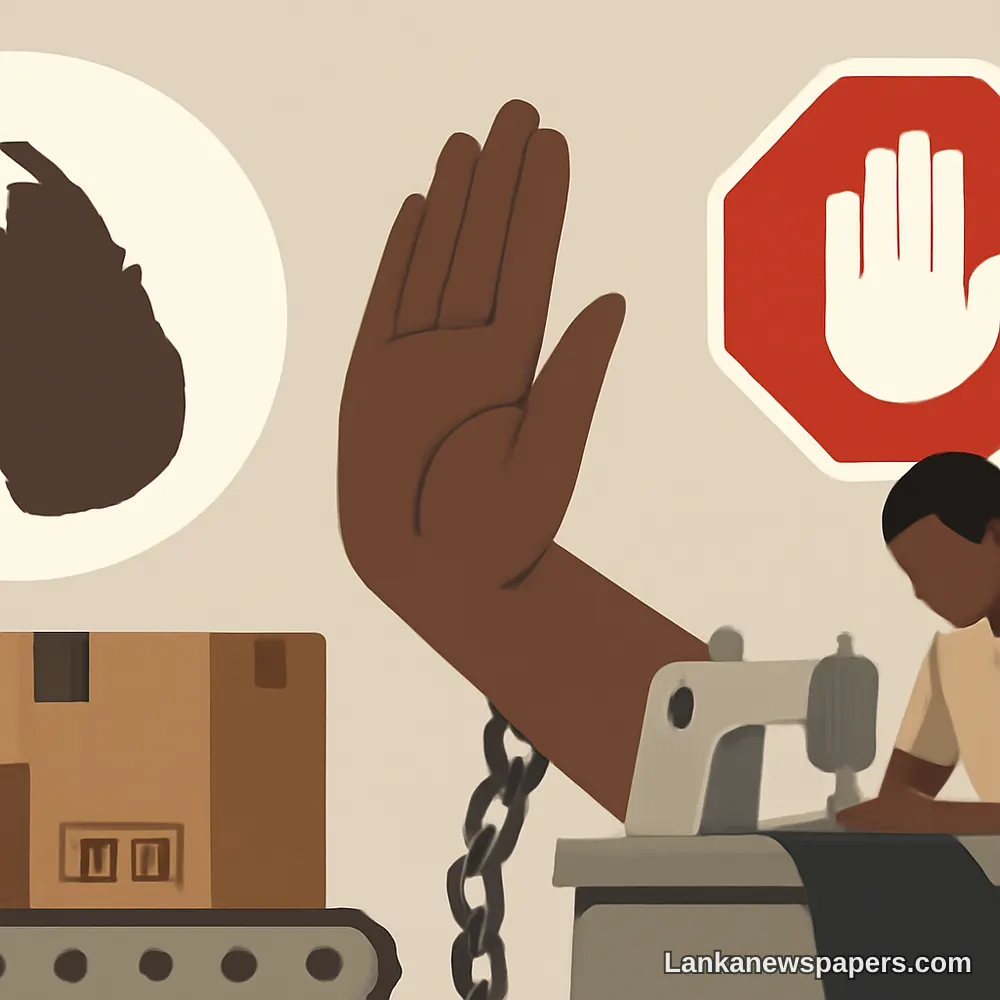
Government Takes Stand Against Exploitative Labour Practices in Global Supply Chains
Sri Lanka has introduced a ban on the importation of goods that are produced using forced labour, marking a significant step by the island nation in aligning its trade policies with international human rights standards.
The move signals a firm stance by the Sri Lankan government against exploitative labour practices that persist in various parts of the world, and positions the country alongside a growing number of nations that have enacted similar trade restrictions in recent years.
What the Ban Means for Importers
Under the new regulations, businesses and traders operating in Sri Lanka will be prohibited from bringing in products that have been identified as manufactured through the use of forced or compulsory labour at any stage of their production or supply chain. The measure is expected to place greater scrutiny on import documentation and the sourcing practices of local companies dealing in foreign goods.
Importers will likely be required to demonstrate that their supply chains are free from forced labour violations, a compliance requirement that could prompt significant changes in how businesses vet their overseas suppliers and trading partners.
Broader Implications for Trade and Human Rights
The ban reflects a wider global movement to use trade policy as a tool to combat modern slavery and labour exploitation. Several major economies, including the United States and members of the European Union, have already implemented legislation targeting goods linked to forced labour, and Sri Lanka's decision brings it closer to these international norms.
Human rights advocates are likely to welcome the development as a meaningful commitment to ethical trade, though the effectiveness of the measure will ultimately depend on the robustness of enforcement mechanisms put in place by the relevant authorities.
- The ban targets goods produced with forced or compulsory labour anywhere in the supply chain.
- Importers may face new documentation and compliance obligations.
- The policy aligns Sri Lanka with international human rights and trade standards.
- Enforcement mechanisms will be critical to the success of the regulation.
As Sri Lanka continues to navigate complex relationships with key trading partners and international financial institutions, this policy move may also serve to strengthen the country's credentials as a responsible and transparent trading nation on the global stage.


💬 Join the Discussion 2
See what readers are saying — and add your view.
Good step but who is going to actually enforce this?
Exactly, on paper only. Same as always with this goverment.