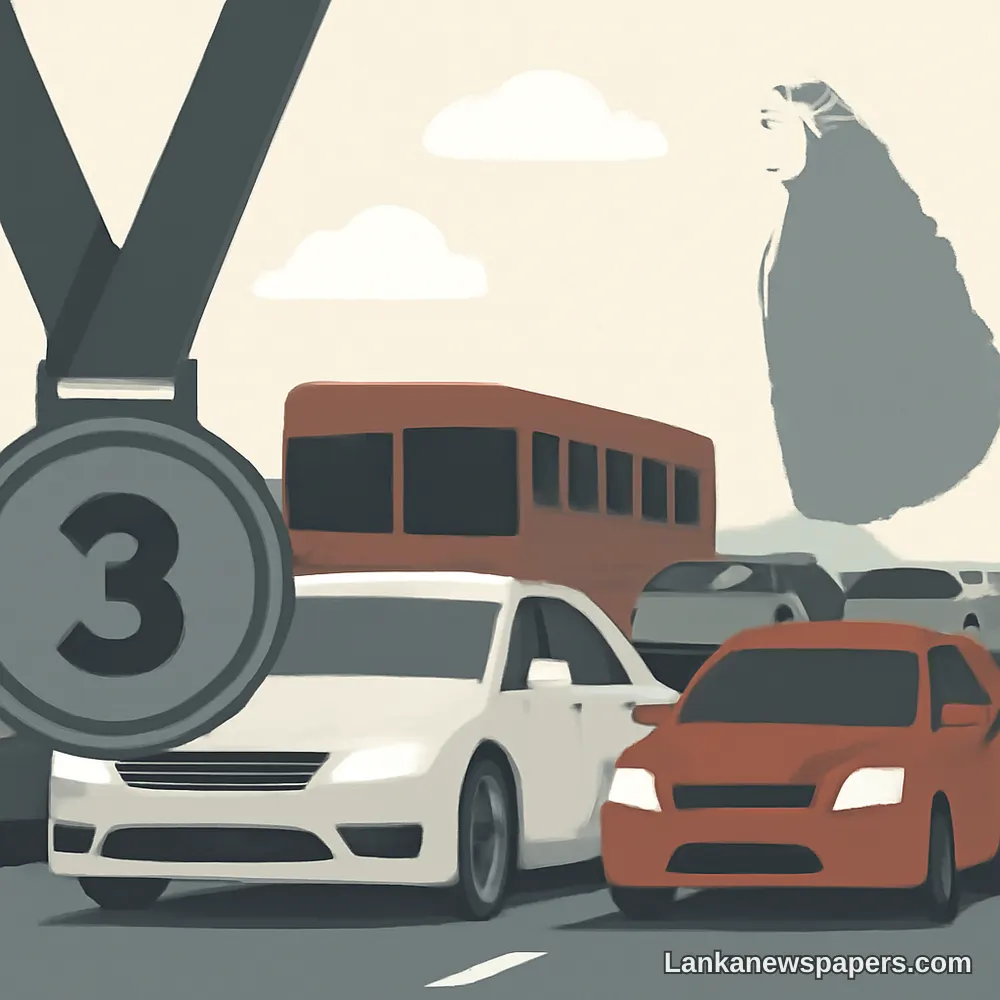
Island Nation Among World's Worst for Traffic Gridlock
Sri Lanka has been ranked the third most traffic-congested country in the world, a sobering distinction that will come as little surprise to the thousands of commuters who spend hours trapped in gridlock on the island's roads each day.
The ranking places Sri Lanka among the most challenging nations globally when it comes to road congestion, highlighting a persistent infrastructure and urban planning crisis that has long frustrated residents, businesses, and policymakers alike.
A Daily Struggle for Commuters
For many Sri Lankans, particularly those living and working in and around the Colombo metropolitan area, heavy traffic is an unavoidable reality of daily life. Peak-hour congestion regularly brings major arterial roads to a standstill, adding significant time and stress to ordinary commutes and impacting productivity across the country.
The situation is driven by a combination of factors that experts and urban planners have repeatedly flagged over the years:
- Rapid growth in private vehicle ownership outpacing road infrastructure development
- Insufficient and underdeveloped public transportation networks
- Urbanisation concentrated heavily around Colombo with limited decentralisation
- Inadequate road capacity and poor traffic management systems in key areas
Economic and Environmental Consequences
Beyond the daily inconvenience, chronic traffic congestion carries serious economic consequences for Sri Lanka. Lost productivity, increased fuel consumption, and higher vehicle operating costs place a measurable burden on businesses and households alike — a concern that takes on added weight given the country's recent economic difficulties.
The environmental toll is equally significant. Extended idling and stop-start driving conditions contribute to elevated vehicle emissions, worsening urban air quality at a time when Sri Lanka, like many developing nations, faces growing pressure to address its carbon footprint.
Calls for Urgent Action
The latest global ranking is expected to renew calls on authorities to fast-track investments in public transport, including the long-discussed expansion and modernisation of rail services and the introduction of more reliable bus rapid transit options. Urban planners have repeatedly stressed that meaningful congestion relief requires a comprehensive, long-term strategy rather than piecemeal road-widening projects.
For now, however, Sri Lanka's third-place position on the global congestion index serves as a stark reminder that the country's traffic woes demand urgent and sustained attention from both government and urban development authorities.
💬 Join the Discussion 4
See what readers are saying — and add your view.
Good driver-discipline adds to the equation too😂
goverment builds highways but no proper public transport, what did they expect
third place in the whole world, what an achievement men
not surprised at all, have you tried colombo at 5pm