MPs Warned of Rising Tech-Driven Human Trafficking and Fake Foreign Job Scams in Sri Lanka
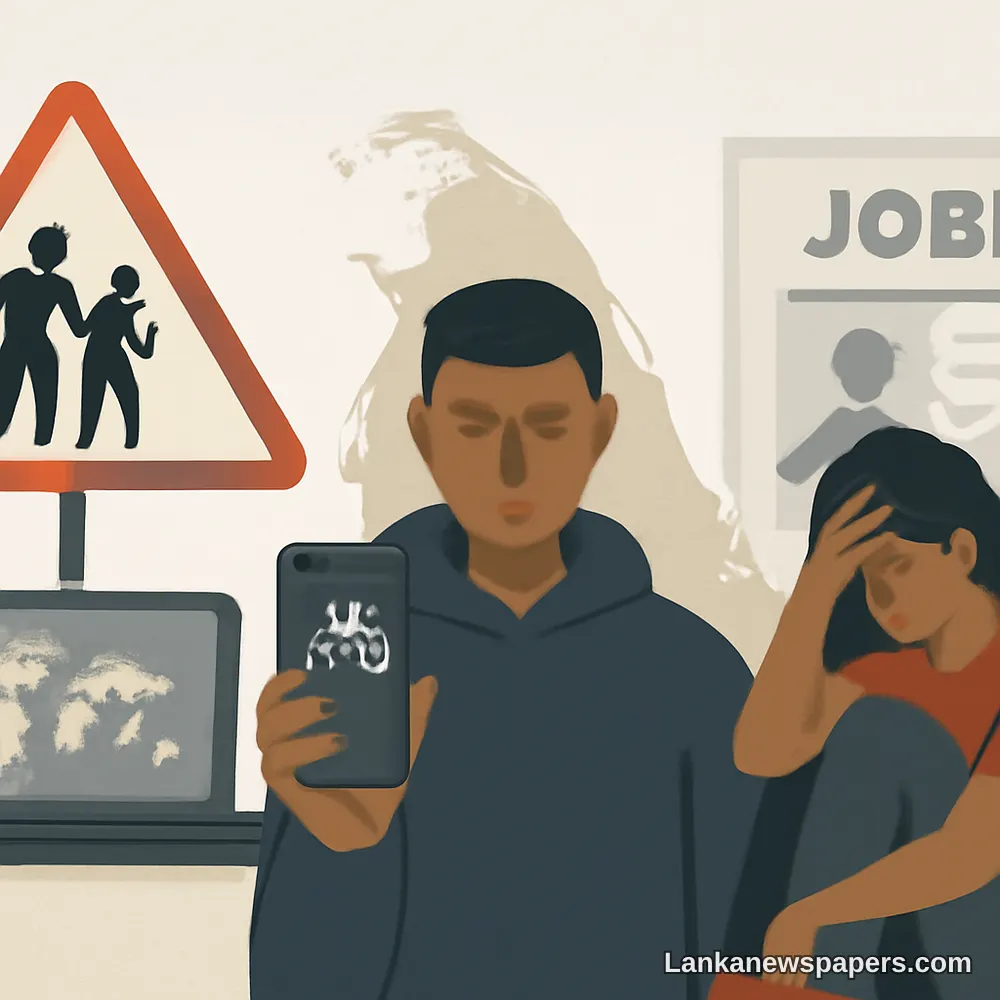
Human trafficking in Sri Lanka has taken on a far more dangerous and sophisticated character, with fraudulent overseas employment schemes and technology-driven recruitment tactics now posing a serious and growing threat to vulnerable citizens, Parliament was told during a special briefing.
A Threat Evolving With Technology
Lawmakers heard that traffickers are increasingly exploiting digital platforms and online networks to lure unsuspecting victims with false promises of lucrative employment abroad. What was once a crime carried out through word of mouth and physical networks has transformed into a highly organised operation leveraging modern communication tools to reach a far wider pool of potential victims.
Deceptive job advertisements, fake recruitment agencies and fraudulent visa arrangements were highlighted as key methods being used to trap Sri Lankan men and women — many of them from economically vulnerable backgrounds — into exploitative and often dangerous situations overseas.
Coordinated National Response Urged
Members of Parliament were urged to recognise that no single institution can tackle this threat alone. Speakers at the briefing called for a unified, whole-of-government approach that brings together law enforcement, immigration authorities, labour regulators and social welfare bodies to counter trafficking networks more effectively.
The need for stronger legal frameworks, improved victim identification processes and greater public awareness campaigns was also stressed, with particular emphasis on educating communities most at risk of being targeted by unscrupulous recruiters.
Foreign Employment Sector Under Scrutiny
Sri Lanka's large migrant worker population makes the country particularly susceptible to trafficking disguised as legitimate foreign employment. Thousands of Sri Lankans travel abroad each year in search of better livelihoods, and experts warned that this desperation is being ruthlessly exploited by criminal networks operating both locally and internationally.
- Fake job offers promising high wages in the Middle East, Southeast Asia and beyond
- Fraudulent recruitment agents charging excessive and illegal fees
- Use of social media platforms to advertise false opportunities
- Forged documentation used to facilitate illegal travel
Lawmakers were reminded that human trafficking is not a distant or abstract crime — it is happening within Sri Lanka's borders and affecting real families across the country.
Call for Legislative and Institutional Action
The parliamentary session underscored the urgency of reviewing and strengthening existing anti-trafficking legislation to keep pace with the rapidly changing methods employed by criminal networks. Officials also pointed to the importance of international cooperation, given the cross-border nature of many trafficking operations.
Civil society groups and victim support organisations are expected to play a critical role in any coordinated response, providing frontline assistance to survivors while helping to identify trafficking patterns on the ground.
The briefing served as a stark reminder that protecting Sri Lanka's citizens — particularly its most economically vulnerable — from exploitation must remain a pressing national priority.


💬 Join the Discussion 1
See what readers are saying — and add your view.
my cousin nearly fell for one of these dubai job ads last year. so dangerous