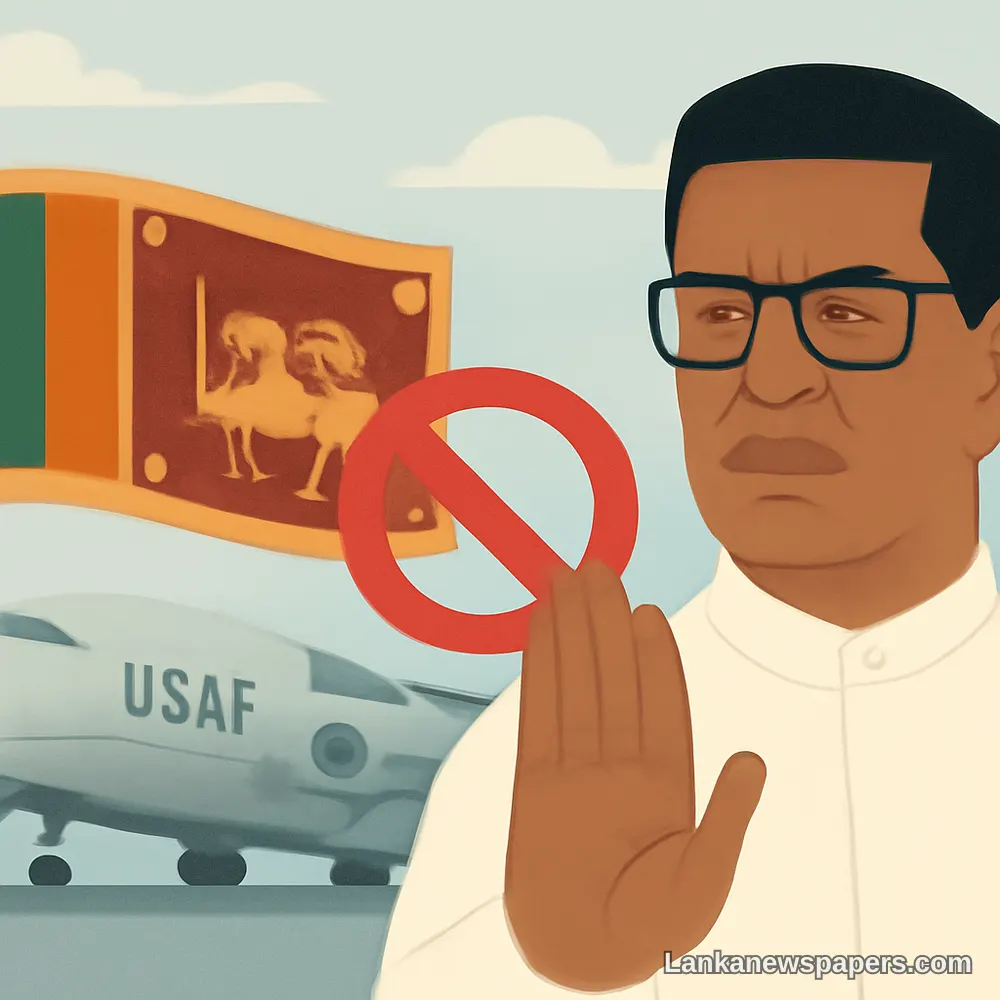
Sri Lanka has refused to grant ground access to United States warplanes, President Anura Kumara Dissanayake confirmed, reaffirming the island nation's long-standing policy of neutrality in matters of foreign military presence.
The announcement signals a firm stance by the Dissanayake administration on preserving Sri Lanka's sovereignty and independence amid growing geopolitical competition in the Indian Ocean region, where major powers including the United States, China, and India have all been vying for strategic influence.
Neutrality at the Forefront
Sri Lanka has historically sought to maintain a balanced foreign policy, carefully avoiding entanglements that could draw it into the orbit of any single global power. The president's confirmation that ground access was denied to US military aircraft underscores this approach, sending a clear message to Washington and other international partners about Colombo's red lines.
The Indian Ocean has become an increasingly contested space in recent years, with Sri Lanka's geographic location making it a strategically significant nation for any power seeking to project influence across the region.
Significance for Sri Lanka's Foreign Policy
The decision carries considerable weight at a time when Sri Lanka is navigating complex relationships with multiple global partners, particularly as the country continues its economic recovery following the devastating financial crisis of 2022.
- Sri Lanka has consistently maintained a policy of non-alignment in military affairs
- The country's strategic location in the Indian Ocean makes it a focal point for great power competition
- The Dissanayake government has signalled its intent to preserve national sovereignty in defence matters
Observers note that while Sri Lanka actively courts foreign investment and diplomatic partnerships, the government appears resolute in drawing a distinction between economic cooperation and military accommodation.
The refusal to grant ground access to US warplanes reflects a broader commitment by the current administration to an independent foreign policy free from external military obligations.
No official response from the United States government had been issued at the time of reporting. The development is expected to draw close attention from regional analysts monitoring the shifting alliances and allegiances across South Asia and the wider Indo-Pacific.

💬 Join the Discussion 3
See what readers are saying — and add your view.
finally goverment doing something right for once
good. we dont need to get dragged into other peoples wars
easy to say but then who helps us when we need something