Six Prime Ministers in Ten Years: What Britain's Political Revolving Door Teaches Sri Lanka About Accountability
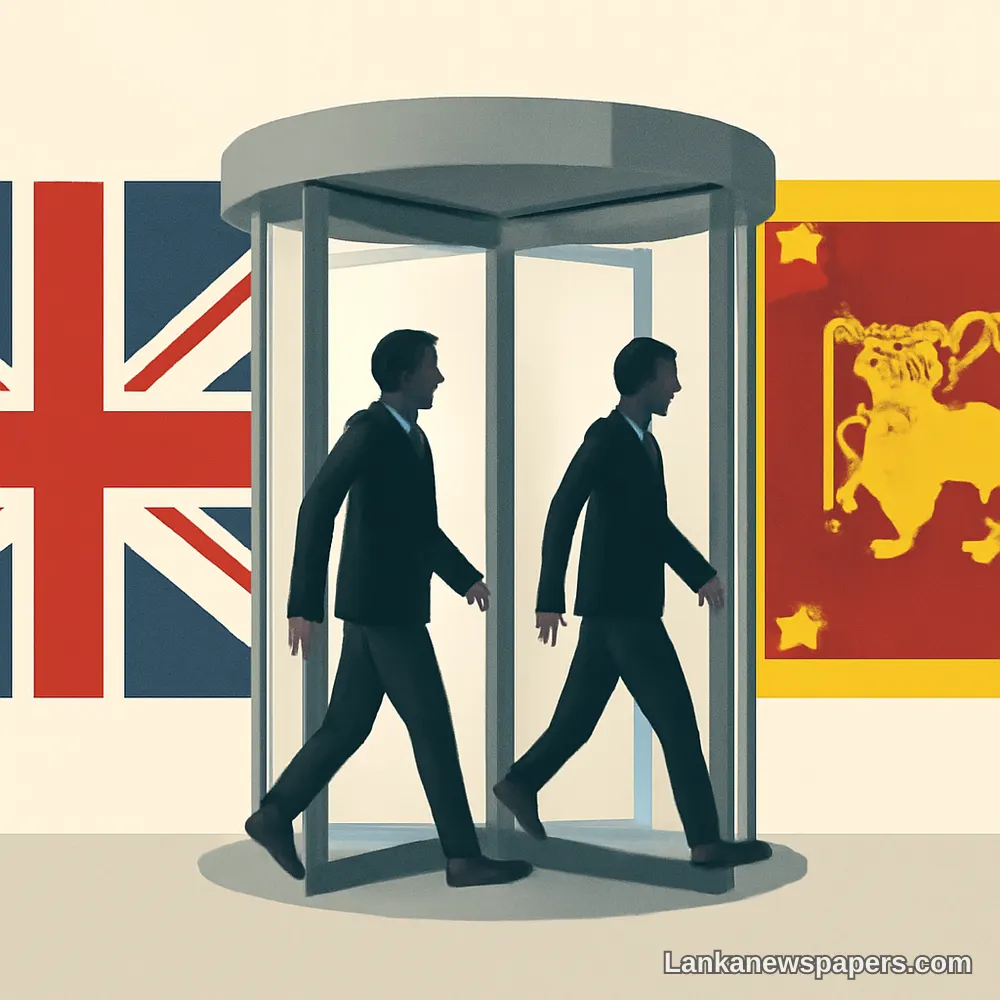
The United Kingdom, long regarded as the birthplace of modern parliamentary democracy, has witnessed a remarkable and turbulent period of political instability over the past decade — cycling through six Prime Ministers in just ten years. For Sri Lanka, a nation still navigating its own complex democratic challenges, Britain's experience carries important lessons about political accountability, institutional resilience, and the consequences of leadership without responsibility.
A Decade of Disorder at Downing Street
From David Cameron's resignation following the Brexit referendum in 2016 to the brief and chaotic tenure of Liz Truss in 2022 — whose 45-day premiership became a symbol of governance failure — Britain's political class has struggled to maintain stable, accountable leadership. Each departure carried its own narrative of broken promises, policy failures, or loss of public and parliamentary confidence.
Theresa May battled endlessly over Brexit before resigning. Boris Johnson departed amid ethics scandals. Rishi Sunak eventually led his Conservative Party to a historic electoral defeat. The pattern reveals a deeper structural tension between political ambition and genuine accountability.
What Accountability Actually Means
In functional democracies, political accountability operates at several levels. Leaders are expected to answer to parliament, to their party, and ultimately to the electorate. When those mechanisms work — even imperfectly, as in Britain's case — leaders who fail are removed, whether by a vote of no confidence, internal party pressure, or a general election.
The British experience demonstrates that accountability, however messy, remains the most reliable check on the abuse of political power.
Critically, what makes these transitions meaningful is not simply that leaders changed, but that institutions — the civil service, the judiciary, the free press, and an active parliament — continued to function independently and without fear of political retribution.
The Sri Lankan Context
Sri Lanka has had its own turbulent political history, including the unprecedented popular uprising of 2022 that forced President Gotabaya Rajapaksa to flee the country and resign amid a devastating economic crisis. That moment represented a powerful expression of public accountability — citizens demanding answers for catastrophic governance failures.
Yet structural accountability remains a persistent challenge on the island. Questions continue to surround the independence of key institutions, the enforcement of anti-corruption measures, and the willingness of political leaders to genuinely answer for policy decisions that have cost ordinary Sri Lankans dearly.
Key Lessons Sri Lanka Can Draw
- Institutions matter more than individuals: Britain survived its political chaos partly because its institutions held firm. Sri Lanka must strengthen independent oversight bodies, the judiciary, and the legislature.
- Transparency must be non-negotiable: Leaders who govern without transparency erode public trust rapidly. Open governance is not a luxury — it is a democratic necessity.
- Electoral consequences must be real: For accountability to function, voters must be empowered with accurate information and genuine electoral choice, free from patronage politics.
- No leader is above scrutiny: The British example shows that no office — however powerful — shields a leader from consequences when they lose the confidence of parliament or the people.
A Timely Reflection
As Sri Lanka continues its economic recovery and political recalibration following the 2022 crisis, the British experience — both its failures and its underlying institutional strengths — offers a valuable mirror. Political instability need not be permanent, but stability built on unaccountable leadership is ultimately more dangerous than the turbulence that removes it.
The real lesson is not that changing leaders frequently is desirable, but that a political culture in which leaders genuinely face consequences for their actions is the foundation upon which lasting stability is built. Sri Lanka's democratic journey depends on whether its institutions and its citizens can hold that line.



💬 Join the Discussion 3
See what readers are saying — and add your view.
dont compare UK to Sri Lanka, totally different system no.
at least in UK they resign when they do wrong. our ppl just stay and stay.
exactly yaar, Ranil alone was PM how many times?