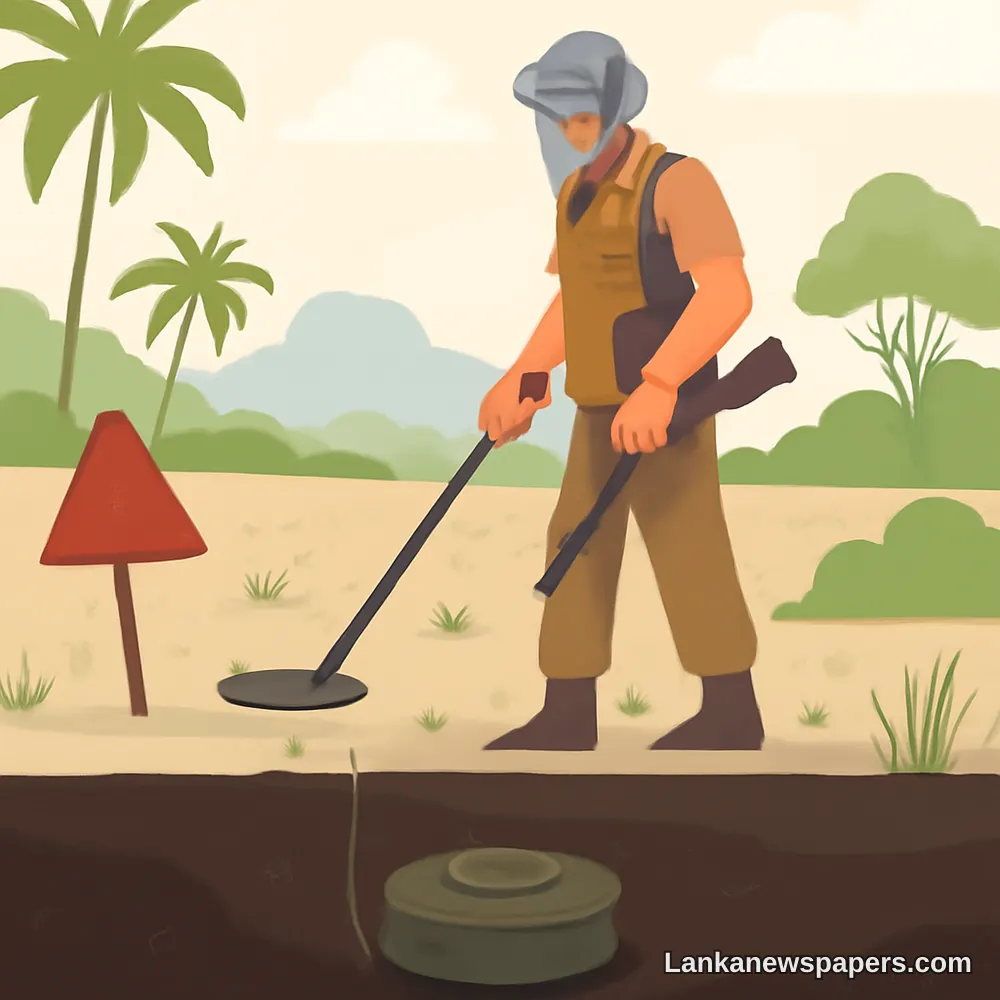
A Deadly Legacy Beneath the Surface
Decades after the guns fell silent, Sri Lanka continues to fight a war that most people never see — one buried inches beneath the earth. Landmines and unexploded ordnance left behind from the country's 26-year civil conflict remain a persistent and deadly threat across parts of the island's north and east, continuing to claim lives and limbs long after the official end of hostilities in 2009.
The Scale of the Problem
The contamination left by the conflict between government forces and the Liberation Tigers of Tamil Eelam (LTTE) spans vast tracts of agricultural and residential land. For communities in the Northern and Eastern Provinces, the invisible danger lurking underfoot has severely hampered the ability of displaced families to return home, cultivate their fields, and rebuild their lives in the years since the war ended.
Mine action teams operating across these regions continue to identify and clear contaminated land, a painstaking process that demands both technical precision and considerable resources. Each cleared hectare represents not just a safety milestone, but the restoration of livelihoods and dignity to communities that have already endured enormous suffering.
Communities Living in the Shadow of Fear
For residents in affected areas, the threat is not a distant or abstract concern. Farmers venturing into their own fields, children playing near abandoned stretches of land, and families attempting to settle on returned property all face risks that those in other parts of the country rarely consider. Casualties — though less frequent than in the immediate post-war years — continue to be recorded, each one a stark reminder that the conflict's physical consequences have not been fully erased.
The land remembers the war even when people are trying hard to forget it. Every cleared field is a step toward genuine peace.
Survivors of landmine incidents frequently face life-altering injuries, including amputations, and require sustained medical and rehabilitative support that places additional strain on already stretched local health services.
Clearance Efforts and International Support
Sri Lanka has received significant international assistance in its demining efforts, with organisations including the United Nations Mine Action Service and various non-governmental bodies contributing funding, expertise, and equipment. The Sri Lanka Army's Humanitarian Demining Unit has also played a central role in clearance operations, working alongside civilian agencies to systematically survey and neutralise contaminated zones.
Progress has been made — hundreds of thousands of mines and pieces of unexploded ordnance have been destroyed, and significant areas of land have been released back to communities. However, experts caution that full clearance remains a long-term undertaking, with some contaminated areas proving particularly difficult to access and clear safely.
The Road to Full Reclamation
Beyond the physical clearance work, the landmine crisis intersects with broader questions of post-war reconciliation, resettlement, and economic development in the affected provinces. Land that cannot be safely used is land that cannot support livelihoods, and the continued presence of mines serves as a physical embodiment of the unresolved dimensions of Sri Lanka's post-conflict transition.
Advocates working in the field argue that sustained political will, consistent funding, and community-centred approaches are essential if Sri Lanka is to fully reclaim its contaminated land and deliver on the promise of a peaceful future for all its citizens — including those whose daily lives are still shaped by a war that officially ended more than fifteen years ago.

💬 Join the Discussion 0
Be the first to share your view on this story.