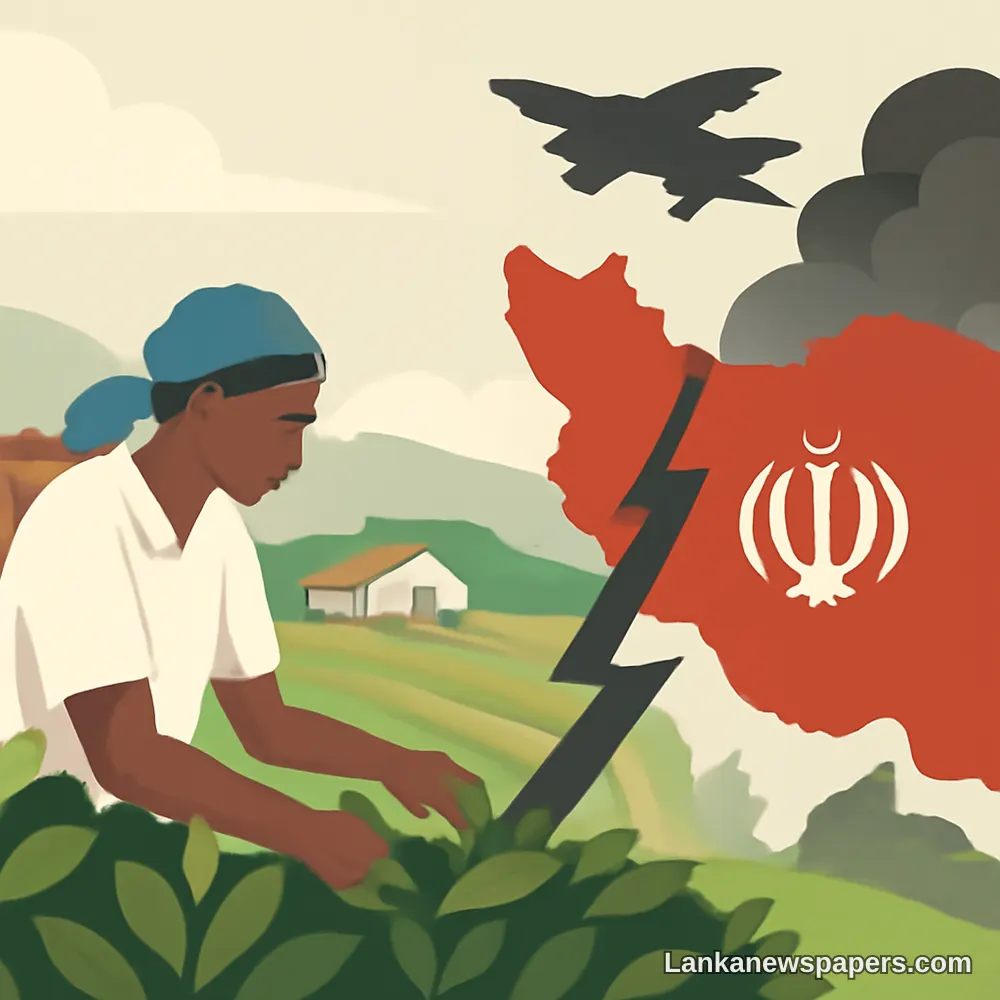
Sri Lanka's tea industry, one of the island nation's most critical sources of foreign exchange, is facing a deepening crisis as escalating conflict involving Iran disrupts export flows and rattles key markets across the Middle East and beyond.
A Lifeline Under Threat
Tea remains among Sri Lanka's most important export commodities, generating hundreds of millions of dollars annually and supporting the livelihoods of millions of workers across the country's central highlands. Any sustained disruption to major buying markets therefore carries serious consequences for the broader national economy.
Iran has historically been one of Sri Lanka's most significant tea export destinations, absorbing large volumes of Ceylon Tea each year. The renewed outbreak of conflict in the region has thrown that trade relationship into serious jeopardy, with exporters and industry stakeholders now scrambling to assess the full extent of the damage.
Exporters Sound the Alarm
Industry insiders warn that the situation is already affecting order placements, shipping routes, and payment mechanisms. Sanctions environments and financial restrictions linked to Iran have long complicated trade dealings, but the added dimension of active conflict has intensified uncertainty to a level that many in the sector describe as deeply alarming.
- Export volumes to affected markets are reported to be declining sharply
- Shipping and logistics disruptions are adding costs and delays
- Payment processing through international banking channels remains complicated
- Smaller exporters with heavy reliance on Middle Eastern buyers face the greatest exposure
Broader Economic Implications
Sri Lanka is still navigating its recovery from a historic economic crisis that brought the country to its knees in 2022. Foreign exchange earnings remain a priority for stabilising the rupee and meeting debt obligations, making any threat to export revenue a matter of national concern.
The tea industry cannot afford another prolonged shock. Every disruption to our export markets directly affects plantation workers, smallholder farmers, and the foreign reserves the country depends on.
Government officials and industry bodies are being urged to pursue alternative markets aggressively and to engage diplomatically where possible to protect existing trade relationships from further deterioration.
Search for Alternative Markets
Industry analysts stress that Sri Lanka must accelerate efforts to diversify its tea export base, reducing its dependence on any single regional market. Countries in East Asia, Europe, and other parts of the Middle East not directly affected by the conflict have been identified as potential growth destinations for Ceylon Tea.
However, experts caution that building new market share takes time — a luxury the industry may not have as the crisis unfolds in real time and exporters face mounting financial pressure in the near term.
The Sri Lanka Tea Board and relevant government ministries are expected to convene discussions on emergency measures to support affected exporters and explore contingency trade arrangements as the situation continues to develop.



💬 Join the Discussion 2
See what readers are saying — and add your view.
tea industry already struggling now this also. goverment must find new markets fast
new markets wont appear overnight no, these deals take years