Sri Lanka's $57.4 Million ADB Solar Project Undermined by Government's Own Policy Reversal
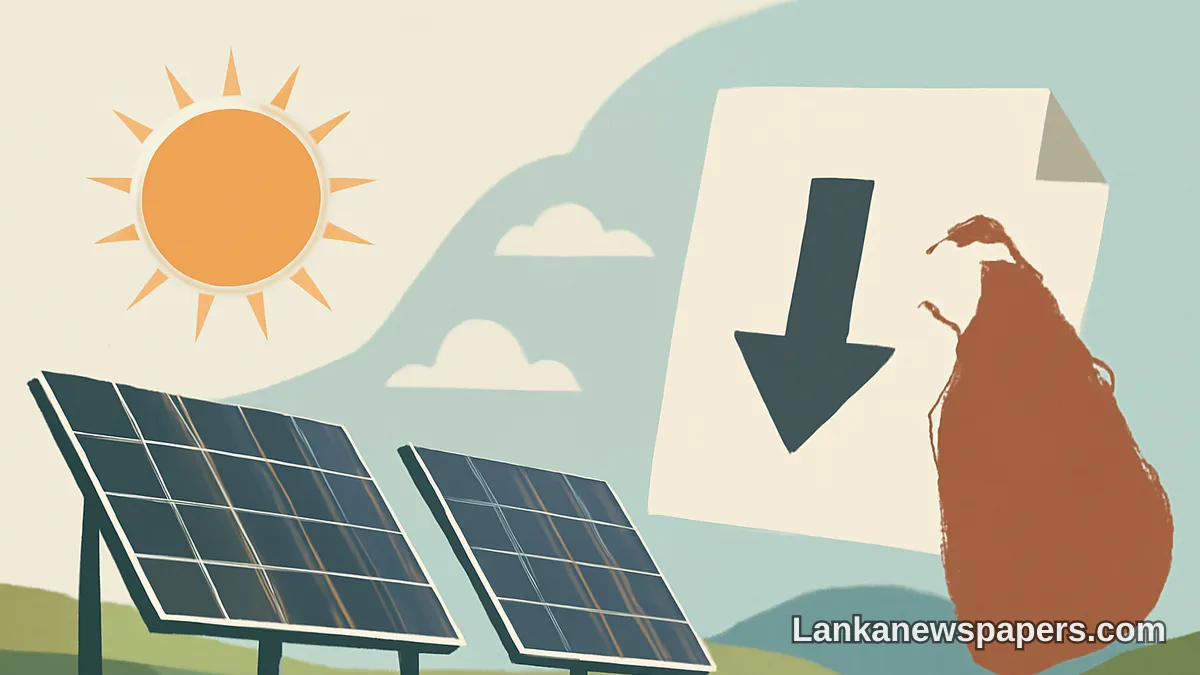
Serious questions are being raised about the Sri Lankan Government's policy coherence after the country secured a USD 57.4 million financing package from the Asian Development Bank (ADB) to support a virtual net metering initiative — only for authorities to simultaneously move towards scrapping net metering for new rooftop solar connections.
A Contradiction at the Heart of Energy Policy
The ADB-backed project was designed to expand rooftop solar adoption across Sri Lanka through a virtual net metering framework, which allows electricity consumers to offset their energy bills by feeding surplus solar power back into the national grid. The financing package represented a significant vote of confidence from the regional development bank in Sri Lanka's renewable energy ambitions.
However, the Government has reportedly initiated steps to eliminate net metering arrangements for new rooftop solar installations — a move that directly conflicts with the very foundation upon which the ADB funding was secured. Critics argue that dismantling net metering while simultaneously drawing down financing tied to its expansion sends a deeply contradictory message to both international partners and local investors in the renewable energy sector.
What Is Virtual Net Metering?
Virtual net metering differs from traditional net metering in that it does not require the solar installation and the beneficiary connection to be at the same physical location. This makes it particularly useful for apartment dwellers, small businesses, and community energy projects that cannot install panels on their own premises. The system is widely regarded as an inclusive and scalable mechanism for broadening access to solar energy benefits.
Investor Confidence at Risk
The apparent policy contradiction raises broader concerns about Sri Lanka's reliability as a destination for green energy investment at a time when the country is actively seeking to rebuild its economy and attract foreign capital. Renewable energy has been positioned as a cornerstone of Sri Lanka's long-term energy security strategy, and inconsistent policymaking risks undermining that narrative.
Industry stakeholders have warned that prospective investors in the rooftop solar segment may adopt a wait-and-see approach until there is greater regulatory clarity, potentially slowing the rollout of new installations across the country.
Questions Over Coordination Between Ministries
The situation has drawn attention to what observers describe as a lack of coordination between the relevant government ministries and agencies responsible for energy policy. Securing multilateral financing on one hand while pursuing regulatory changes that contradict the terms of that financing on the other points to a disconnect that officials have yet to publicly address.
As Sri Lanka continues its recovery and pushes towards greater energy self-sufficiency through renewables, stakeholders are calling on the Government to issue clear and consistent policy guidance that aligns with its international commitments and the expectations of development partners such as the ADB.
No official statement reconciling the two positions had been issued at the time of publication.



💬 Join the Discussion 3
See what readers are saying — and add your view.
so rooftop solar owners now get nothing back? what happened to net metering?
take ADB money with one hand, kill the policy with the other. classic.
exactly. who is advising these ppl, seriously.