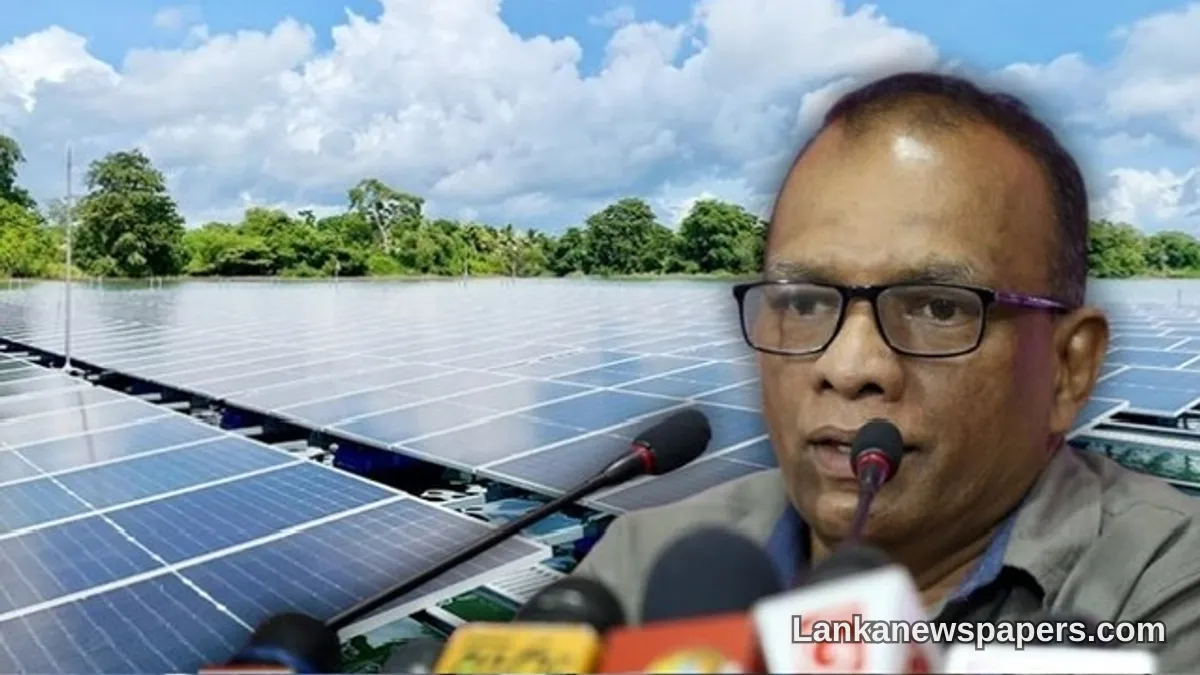
Minister Cites Ongoing Energy Transition as Key Factor
Sri Lankans hoping for a firm date on lower electricity bills will have to wait a little longer, with the Energy Minister acknowledging that the government is not yet in a position to commit to a specific timeline for tariff reductions.
The minister made the remarks as the country continues its push to expand renewable energy capacity, including solar power, as part of a broader strategy to reduce dependence on costly fossil fuel-based generation.
Transition to Renewables Central to Cost Debate
Officials have long argued that shifting Sri Lanka's energy mix toward cleaner, domestically generated sources such as solar, wind, and hydro power will ultimately bring down the cost of electricity for consumers. However, the minister indicated that the benefits of this transition have not yet fully materialised in a way that would allow for meaningful tariff cuts at this stage.
The expansion of solar energy infrastructure across the island has been a focal point of the government's energy policy, with both large-scale projects and household-level rooftop solar schemes being promoted as long-term solutions to the country's electricity cost challenges.
Consumers Await Relief Amid Ongoing Pressure
For many Sri Lankan households and businesses, electricity costs remain a significant financial burden, particularly following the steep tariff hikes introduced during the economic crisis in recent years. Consumer groups and opposition politicians have continued to press the government for concrete action and clearer commitments on when relief can be expected.
The government has signalled that tariff adjustments will depend on measurable progress in the renewable energy rollout and improvements in the overall financial position of the Ceylon Electricity Board.
While no specific date has been offered, the minister's comments suggest that any reduction in electricity tariffs remains contingent on the pace of the country's energy sector reforms and the successful integration of new renewable capacity into the national grid.
The Ceylon Electricity Board has faced sustained criticism over its financial management, and analysts note that tariff decisions are also closely linked to ongoing negotiations and targets tied to Sri Lanka's IMF programme.
What Comes Next
Energy sector observers say the coming months will be critical in determining whether the expansion of solar and other renewable projects can generate sufficient savings to justify a downward revision of tariffs. Key factors expected to influence any future decision include:
- The rate of new solar capacity being added to the national grid
- Reductions in the Ceylon Electricity Board's operational losses
- Global fuel prices and their impact on thermal power generation costs
- Compliance with benchmarks set under the IMF economic recovery programme
For now, consumers are being asked to exercise patience as the government works through a complex energy transition, with officials insisting that lower electricity bills remain a goal — even if the road to achieving them is yet to be clearly mapped out.

💬 Join the Discussion 3
See what readers are saying — and add your view.
so when is the solar thing actually helping us? bills still crazy high
no fixed timeline" means never. we all know how this works.
exactly, they been saying "soon" for 2 years already