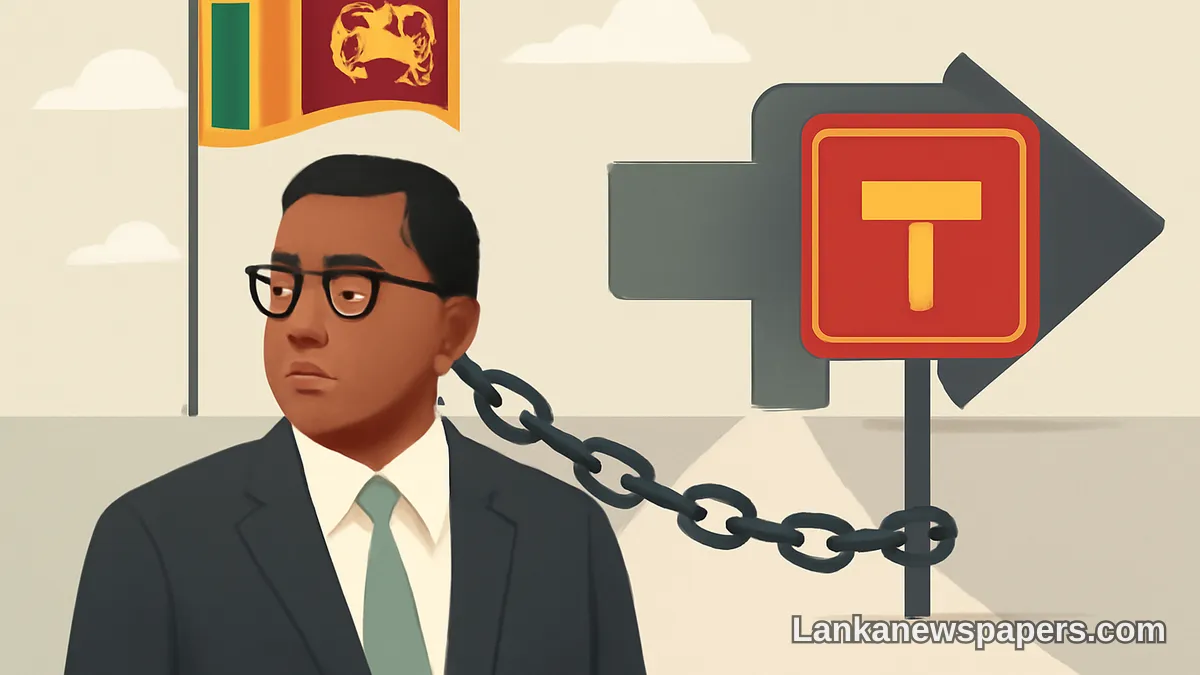
Sri Lanka's bid to bring former Central Bank Governor Arjuna Mahendran back to the island to face justice over the controversial 2015 Treasury bond scam appears to have stalled yet again, with Minister of Public Security Ananda Wijepala admitting that extradition efforts have effectively hit a brick wall.
A Fugitive Beyond Reach
Mahendran, who holds Singaporean citizenship, has remained out of Sri Lanka's legal reach since the bond scam first rocked the country over a decade ago. Despite repeated assurances from successive governments that he would be brought to book, the former central bank chief continues to reside abroad, leaving victims of the scandal and the broader public frustrated by the lack of accountability.
Minister Wijepala's recent admission lays bare the harsh reality that international legal mechanisms, which Sri Lanka has been attempting to invoke, have so far proven insufficient to secure Mahendran's return.
The Bond Scam That Shook Sri Lanka
The 2015 Treasury bond scam remains one of the most damaging financial scandals in Sri Lanka's post-independence history. The affair centred on alleged insider dealings involving the Central Bank's primary dealer system, through which billions of rupees in public funds were believed to have been misappropriated. A Presidential Commission of Inquiry subsequently identified Mahendran as a key figure in the controversy.
- The scam is estimated to have cost Sri Lankan taxpayers billions of rupees in losses.
- A Presidential Commission found sufficient grounds to implicate Mahendran in the wrongdoing.
- Criminal proceedings have been ongoing in Sri Lanka, but without the accused present in the country.
Singapore Remains a Sticking Point
A central obstacle in the extradition process is the absence of a formal extradition treaty between Sri Lanka and Singapore. Without such an agreement in place, compelling Singapore's authorities to hand over one of their own citizens becomes an extraordinarily complex legal and diplomatic undertaking.
Minister Wijepala indicated that diplomatic channels had been explored but had yielded little progress, leaving authorities in Colombo with few viable options to pursue.
Public Frustration Mounts
For many Sri Lankans, the continued inability to bring Mahendran to trial symbolises a deeper malaise within the country's justice system — the perception that powerful individuals with foreign connections can evade accountability with relative ease. Coming at a time when Sri Lanka is still recovering from a devastating economic crisis, public patience with such outcomes is wearing thin.
Civil society groups and opposition politicians have long demanded that the government exhaust every available legal avenue, including engaging international anti-corruption bodies, to ensure that justice is served.
What Happens Next?
With extradition efforts apparently at an impasse, it remains unclear what concrete steps the government intends to take going forward. Legal experts have suggested that Sri Lanka could pursue alternative mechanisms, such as seeking assistance through mutual legal assistance treaties or escalating the matter through diplomatic pressure at a higher level.
For now, however, the case against Arjuna Mahendran — much like the title of Samuel Beckett's famous play — appears to be an exercise in waiting, with justice remaining frustratingly out of reach.

💬 Join the Discussion 3
See what readers are saying — and add your view.
Can someone explain what "brick wall" means here? Singapore refused or what?
They never wanted to bring him back. This is all drama only.
Exactly. If they really tried Singapore wouldnt just say no like that.