Shadow War on the Press: How a Secret Military Unit Targeted Sri Lanka's Journalists — and Escaped Justice
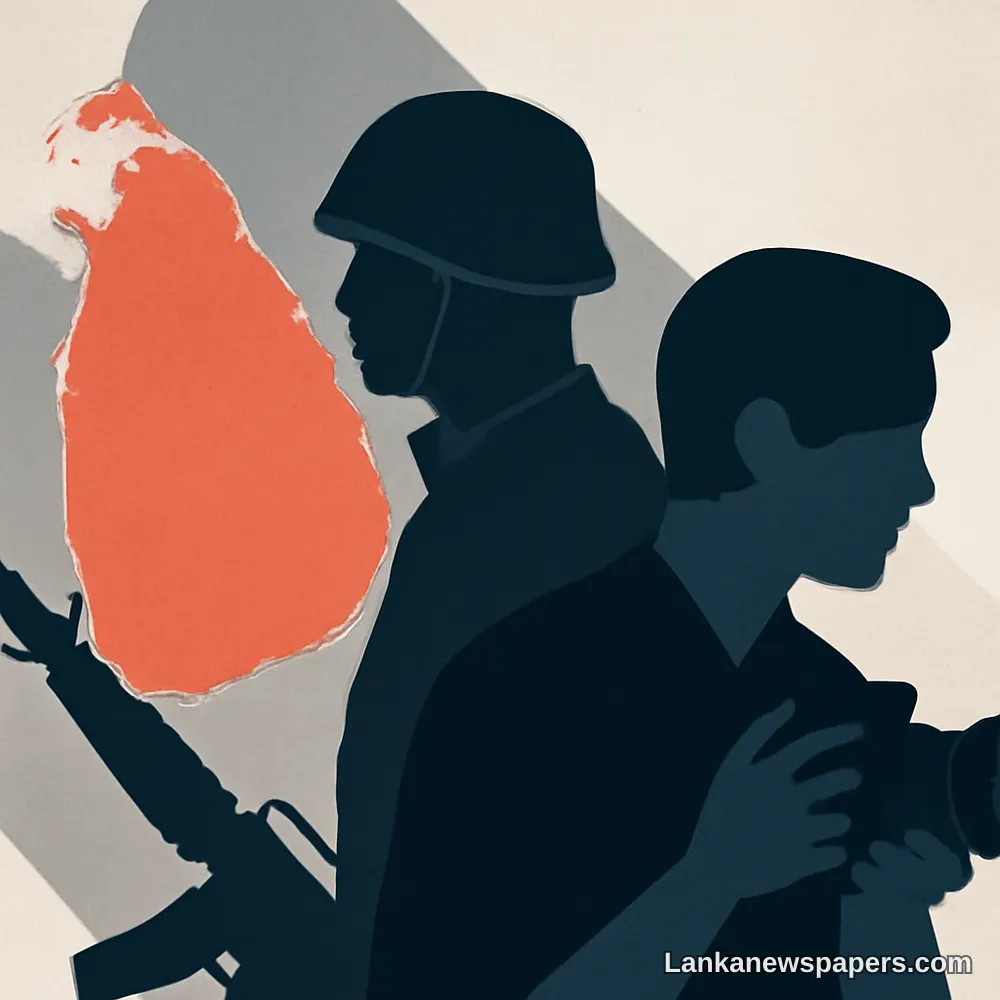
For years, a shadowy military intelligence unit allegedly operated in the darkest corners of Sri Lanka's security apparatus, running a systematic campaign of intimidation, abduction, and violence against journalists who dared to challenge those in power. Despite mounting evidence and international scrutiny, not a single individual has been brought to justice — a failure that continues to haunt the country's democratic credentials.
A Covert Cell Targeting the Fourth Estate
According to investigations and testimony gathered over years of inquiry, a clandestine cell embedded within Sri Lanka's military intelligence structure is believed to have waged a deliberate and coordinated campaign against members of the free press. Journalists, editors, and media institution figures were allegedly monitored, threatened, physically attacked, and in some cases forcibly disappeared by operatives working under the cover of national security.
The targets were not random. Reporters who investigated corruption, exposed human rights abuses, or gave voice to dissenting political opinions found themselves squarely in the crosshairs of a unit that appeared to operate with near-total impunity. Sources familiar with the operations have described a structured chain of command, suggesting these were not rogue actions but calculated state-sanctioned efforts to silence inconvenient truths.
High-Profile Cases That Shocked the Nation
Several cases stand out as emblematic of the alleged campaign. Among the most widely documented is the brutal attack on a prominent newspaper editor and the enforced disappearances of journalists whose fates remain unknown to this day. These incidents sent a chilling message throughout Sri Lanka's media community — report freely, and face grave consequences.
Media freedom organisations both locally and internationally documented a dramatic deterioration in press conditions during periods when the unit is alleged to have been most active. Journalists self-censored, newsrooms were raided, and publications critical of the government or military faced extraordinary pressure to fall in line.
A climate of fear does not require every journalist to be attacked — it only requires enough of them to be, so that the rest stay silent.
Investigations That Led Nowhere
What makes the situation particularly troubling is not merely that these alleged abuses occurred, but that successive governments have failed — or refused — to hold anyone accountable. Multiple investigations were launched over the years, only to stall, be quietly shelved, or produce no meaningful prosecutions.
Critics argue that the lack of accountability is not accidental. The individuals who allegedly ran or sanctioned the covert cell were deeply embedded within institutions that successive administrations found politically useful to protect. Changing governments brought changing rhetoric around media freedom, but the concrete steps needed to deliver justice never materialised.
- No senior military or intelligence official has faced criminal prosecution in connection with the alleged press targeting campaign.
- Key witnesses have reported continued intimidation, undermining their willingness to testify.
- Evidence gathered by independent investigators has reportedly not been adequately pursued by state prosecutors.
- International bodies including United Nations human rights mechanisms have repeatedly called on Sri Lanka to address the impunity gap.
A Democratic Deficit With Lasting Consequences
The consequences of this impunity extend far beyond the individual cases. Sri Lanka's standing as a functioning democracy is measured in part by how it treats its press. When journalists cannot report without fear of state-sponsored violence, the public's right to information is fundamentally compromised — and with it, the accountability mechanisms that democracy depends upon.
Press freedom indices have consistently ranked Sri Lanka poorly in the region, and advocates argue that the failure to prosecute those responsible for the alleged intelligence cell's activities is a central reason why meaningful improvement has remained out of reach.
Calls for a Genuine Reckoning
Civil society groups, media organisations, and international human rights bodies continue to call for an independent, transparent investigation — one insulated from political interference and empowered to follow the evidence wherever it leads. They argue that Sri Lanka cannot credibly claim to have turned a page on its authoritarian past while those who allegedly weaponised state intelligence against journalists walk free.
For the families of disappeared journalists, for the editors who survived attacks, and for a media community that still operates under the long shadow of what occurred, justice remains an open and urgent wound. Until accountability arrives, the story of Sri Lanka's covert war on its free press will remain not just a chapter of history — but an ongoing indictment of the present.

💬 Join the Discussion 0
Be the first to share your view on this story.