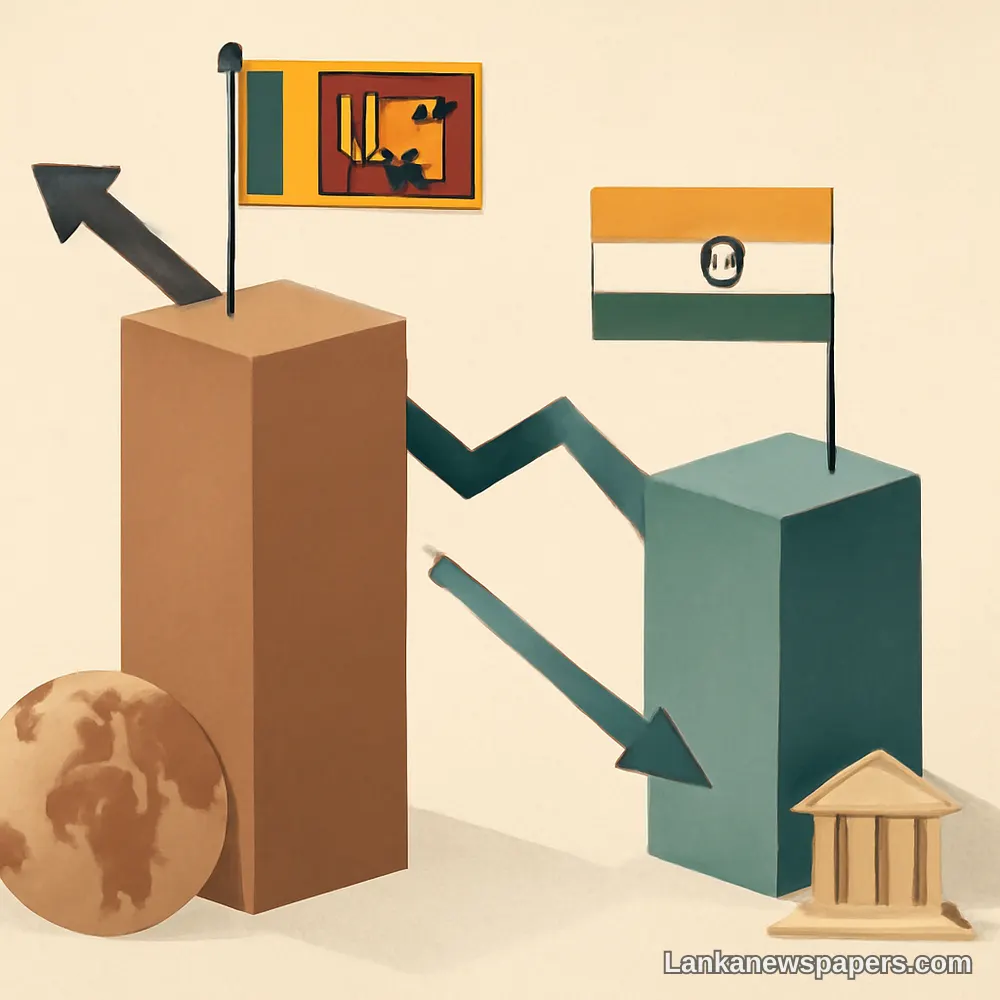
A fresh set of World Bank figures has sparked considerable discussion across South Asia, with data suggesting that Sri Lankans now rank higher than their Indian counterparts in terms of per capita income. While the headline comparison may appear striking at first glance, economists and analysts urge caution before drawing sweeping conclusions.
What the World Bank Data Shows
According to the latest World Bank rankings, Sri Lanka's gross national income (GNI) per capita has edged above that of India, placing the island nation in a higher income bracket on the global index. This development is particularly noteworthy given that Sri Lanka is still navigating its way out of the worst economic crisis in its post-independence history, which reached its peak in 2022.
The ranking places Sri Lanka within the lower-middle to upper-middle income threshold, a position that reflects measured recovery progress following the country's debt default and the severe shortages of fuel, medicine, and essential goods that defined that turbulent period.
Context Is Everything
Analysts are quick to point out that a higher per capita GNI figure does not necessarily translate into a better quality of life for the average citizen. Several important factors must be considered when interpreting these numbers:
- Sri Lanka's population of approximately 22 million is significantly smaller than India's 1.4 billion, which naturally inflates per capita figures.
- Income inequality within Sri Lanka remains a pressing concern, meaning that average figures may not accurately reflect the lived reality of ordinary people.
- India's economic trajectory is one of rapid growth, with its overall GDP now ranking among the largest in the world.
- The cost of living, purchasing power, and access to public services differ vastly between the two nations.
Sri Lanka's Rocky Road to Recovery
The ranking arrives at a time when Sri Lanka is cautiously rebuilding its economy under an International Monetary Fund bailout programme. The government has implemented significant tax reforms, reduced subsidies, and undertaken structural adjustments as conditions of the IMF Extended Fund Facility arrangement.
While macroeconomic indicators such as inflation, foreign exchange reserves, and GDP growth have shown signs of stabilisation, many Sri Lankan households continue to feel the pressure of high living costs and reduced public services.
The per capita income figure is a useful statistical measure, but it tells only part of the story. Real economic wellbeing encompasses employment, healthcare, education, and social security — areas where both nations face distinct and ongoing challenges.
A Symbolic Milestone, Not a Final Verdict
For Sri Lanka, appearing above India in a World Bank income ranking carries undeniable symbolic weight, particularly following the economic devastation of recent years. It signals that the country's reform efforts are yielding measurable results on the international stage.
However, economists emphasise that sustainable development — rather than a single ranking — should remain the true benchmark of progress. With debt restructuring negotiations still ongoing and poverty levels having risen sharply since 2021, Sri Lanka's road to genuine prosperity remains long and complex.
As both nations continue to grow and evolve, such comparisons serve best as conversation starters rather than definitive judgements on the relative wealth or potential of either country's people.


💬 Join the Discussion 4
See what readers are saying — and add your view.
goverment will use this to say economy recovered, watch and see
india has 1.4 billion ppl, per capita comparison is not a fair one at all
on paper we rich, in real life cant afford a kg of rice without checking the price twice
exactly men, rankings mean nothing when cost of living is still killing us