Sri Lanka Holds Fuel Prices Steady Despite Global Oil Surge Toward $100 Mark
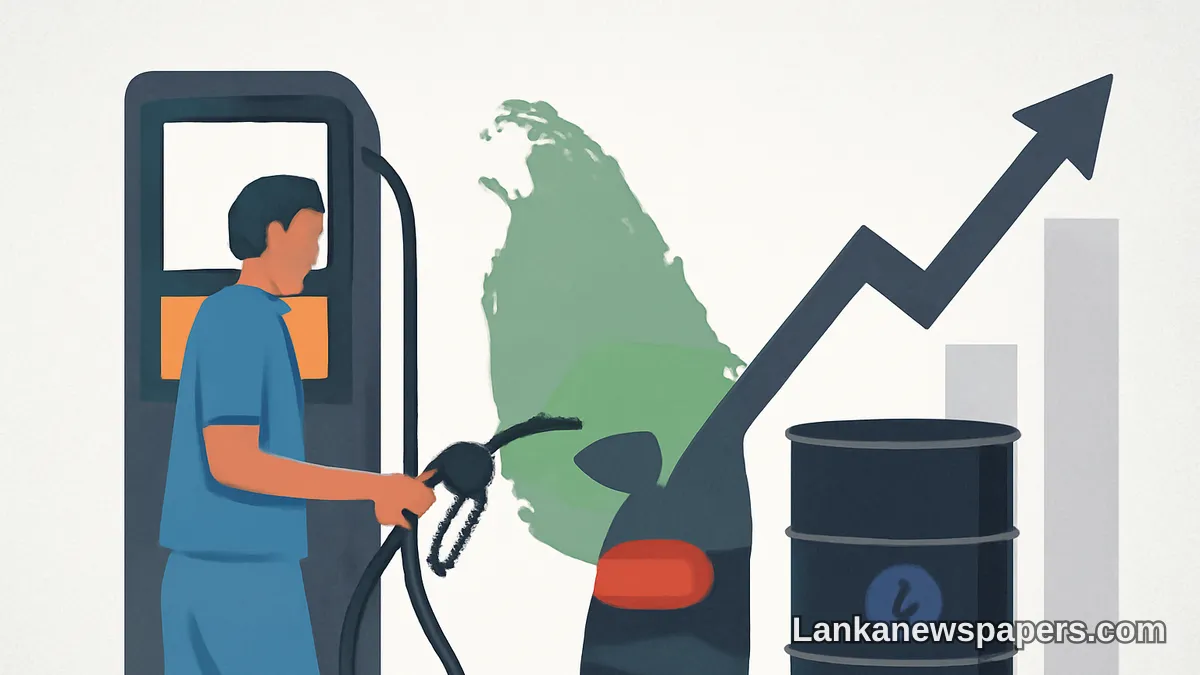
Government Resists Pressure to Revise Pump Prices Amid Rising Global Crude Costs
Sri Lanka has opted to maintain current fuel prices unchanged even as global crude oil values push toward the critical threshold of $100 per barrel, raising fresh concerns about the island nation's energy import bill and fiscal stability.
The decision to hold prices steady comes at a time when international oil markets are experiencing significant upward pressure, a development that directly impacts Sri Lanka, which relies heavily on imported petroleum to meet its energy needs.
A Delicate Balancing Act
Authorities appear to be prioritising consumer relief, keeping pump prices at their current levels to shield households and businesses from an immediate cost-of-living shock. The move signals that the government is absorbing the external price pressure rather than passing it on to an already financially strained public.
Sri Lanka is still navigating its way through the aftermath of its worst economic crisis in decades, and any sharp increase in fuel prices risks reigniting inflationary pressures that had only recently begun to ease.
Why the $100 Threshold Matters
The $100 per barrel mark is widely regarded as a psychologically and economically significant level in global energy markets. When crude trades at or above this point, the consequences tend to ripple across import-dependent economies, affecting:
- Transportation and logistics costs
- Agricultural input and food prices
- Electricity generation expenses
- Foreign exchange reserves, as more dollars are needed to pay for imports
For Sri Lanka, which is still working to rebuild its foreign reserves under an International Monetary Fund recovery programme, sustained high oil prices could complicate efforts to stabilise the external sector.
Looking Ahead
Analysts will be watching closely to see how long the government can sustain the current pricing policy if crude costs remain elevated. A prolonged spell of high global oil prices may eventually force a reconsideration of the fuel pricing formula, testing the administration's capacity to balance fiscal prudence with public welfare.
For now, Sri Lankan motorists and industries can expect no immediate change at the fuel pump, though the situation in international markets bears close monitoring in the weeks ahead.



💬 Join the Discussion 0
Be the first to share your view on this story.