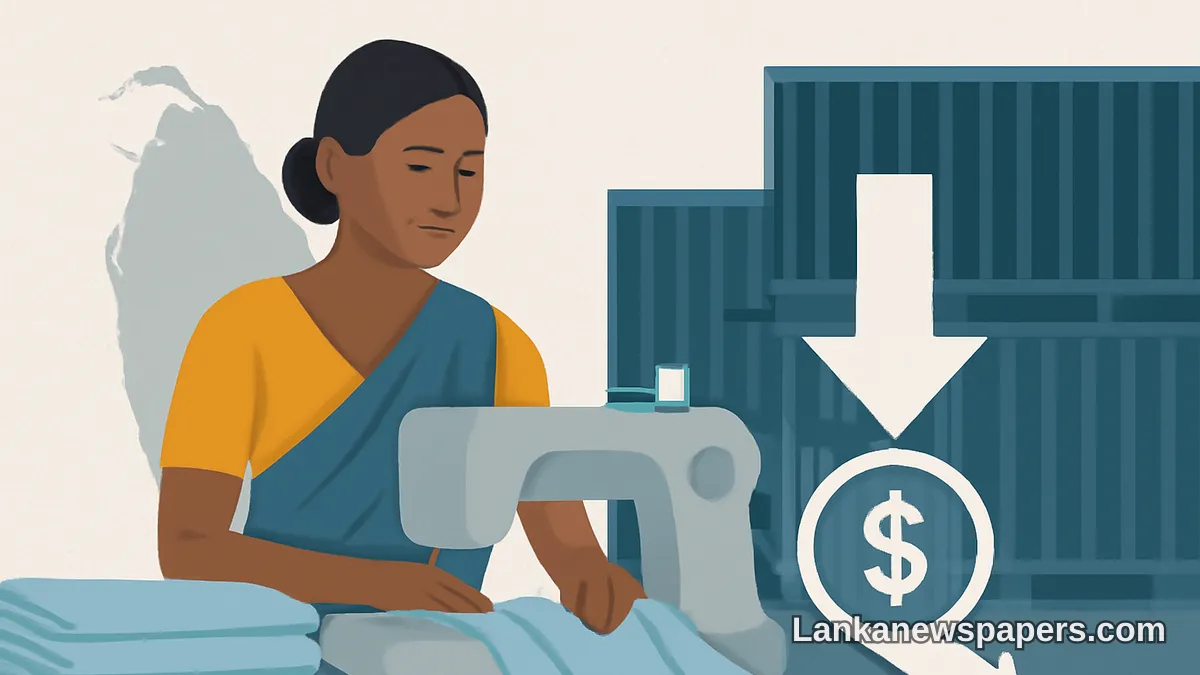
Sri Lanka's apparel exporters are facing a significant disadvantage in the United States market, finding themselves unable to benefit from a tariff refund mechanism that is delivering windfalls to competitors in other garment-exporting nations.
What Is the Tariff Refund Scheme?
The United States operates a duty drawback and tariff refund system that allows certain exporters to reclaim duties paid on imported inputs used in the manufacture of goods subsequently exported to the US. For countries that qualify, this mechanism can substantially reduce production costs and sharpen price competitiveness in one of the world's most lucrative retail markets.
However, Sri Lankan apparel manufacturers and exporters are currently locked out of this benefit, placing the island nation's garment sector at a structural disadvantage compared to rival exporting countries that are able to access these refunds.
A Blow to a Pillar Industry
The apparel and textile sector remains one of Sri Lanka's most important economic engines, consistently ranking among the country's top foreign exchange earners. The industry employs hundreds of thousands of workers, a significant proportion of them women, across factories in the Western, Sabaragamuwa and North Western provinces.
Any erosion of competitiveness in the US market — Sri Lanka's single largest apparel export destination — carries serious implications not only for factory owners but also for the livelihoods of the workers they employ.
Competitive Pressure Mounting
Industry stakeholders warn that rival garment-exporting nations, which do qualify for tariff refunds, are able to offer more attractive pricing to American buyers. This cost gap, if left unaddressed, risks pushing US sourcing decisions away from Sri Lanka toward lower-cost alternatives.
Sri Lanka's apparel sector has built its reputation on quality, compliance and ethical manufacturing — but price competitiveness remains a critical factor in winning and retaining US buyers.
Calls for Government Action
Exporters and industry associations are urging the Sri Lankan government to engage proactively with US trade authorities to explore avenues through which local manufacturers could access similar tariff relief. Diplomatic channels and ongoing trade discussions are seen as potential platforms through which this issue could be raised.
Stakeholders also point to the need for Sri Lanka to accelerate broader trade agreement negotiations with the United States, which could in the long run provide a more permanent and structured framework for preferential market access.
Broader Trade Context
Sri Lanka currently does not benefit from a bilateral free trade agreement with the United States, unlike some competing nations. This absence of a formal trade pact has long been cited as a structural gap that limits the full potential of Sri Lankan exports to the American market across multiple sectors, with apparel being the most acutely affected.
As global supply chains continue to shift and American retailers reassess their sourcing strategies, industry leaders stress that swift and decisive government intervention is essential to safeguard the future of Sri Lanka's garment export trade.


💬 Join the Discussion 4
See what readers are saying — and add your view.
this is why local industry always suffers, no proper lobby in Washington
can someone explain exactly what refund this is? genuine question
so our exporters miss out and competitors get the refund? goverment sleeping as usual
not just sleeping, they dont even know whats happening half the time