From Miracle Material to Marine Menace: Sri Lanka's Growing Battle Against Plastic Pollution
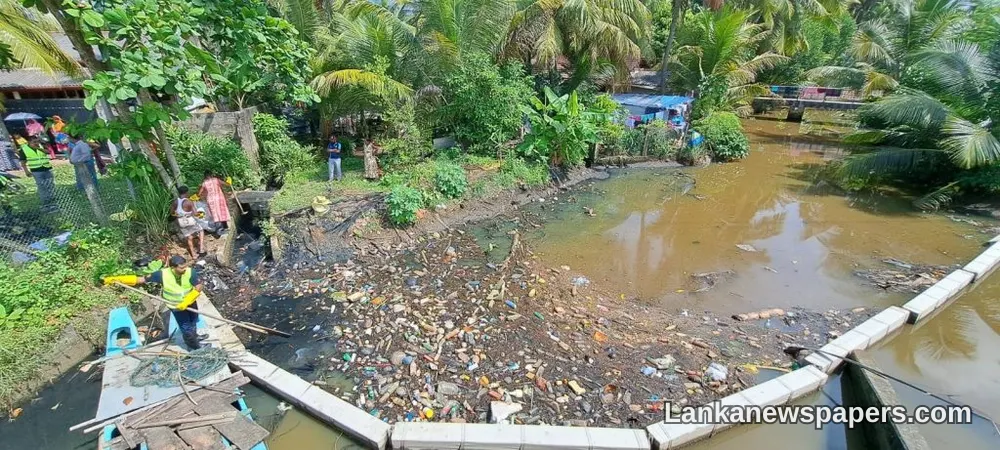
What was once celebrated as a revolutionary material that transformed modern industry and everyday life has become one of the most persistent environmental threats the world has ever faced. Plastic — hailed through much of the 20th century as a miracle of human ingenuity — has now earned the grim designation of a "technofossil," a man-made substance so durable and widespread that it has embedded itself into the geological record of our planet.
A Global Crisis Washing Ashore
The scale of plastic contamination across the natural world is staggering. Scientists have detected plastic particles in the snow atop Mount Everest, the highest point on Earth, and in the crushing depths of the Mariana Trench, the lowest. No ecosystem, it appears, has been spared. For an island nation like Sri Lanka, surrounded by the Indian Ocean and dependent on its marine environment for food security, livelihoods, and tourism, this global crisis carries acute local consequences.
Sri Lanka's coastlines and inland waterways have long served as both a source of plastic pollution entering the ocean and a receiving end of debris carried in by regional currents. The compound nature of the problem — more plastic produced, more escaping into ecosystems, less infrastructure to intercept it — has placed the country at a critical juncture.
The Compounding Nature of the Problem
Marine plastic pollution does not behave like other forms of waste. Once plastic enters the ocean, it does not simply disappear. Over time, sunlight and wave action break larger pieces into microplastics — tiny fragments invisible to the naked eye — which are then ingested by marine life, entering the food chain that ultimately leads back to human dinner tables.
For Sri Lankan fishing communities, this presents a deeply troubling reality. The same waters that have sustained generations of coastal families are increasingly contaminated with synthetic debris. Fisherfolk along the southern and western coasts have reported finding plastic entangled in nets with growing frequency, a visible symptom of an invisible and worsening crisis beneath the surface.
The Response Is Scaling Up
Encouragingly, efforts to address Sri Lanka's marine plastic problem are beginning to match the urgency of the challenge. A range of interventions — spanning government policy, private sector engagement, and grassroots community action — are gaining momentum across the island.
Among the approaches drawing attention are scalable capture technologies and systems designed to intercept plastic before it reaches the ocean. These include river barrier systems positioned at key discharge points, community-led beach clean-up networks, and waste sorting initiatives in coastal districts that aim to reduce the volume of plastic entering waterways in the first place.
- River interception systems targeting high-volume plastic discharge points
- Community and volunteer-driven coastal clean-up programmes
- Improved waste segregation and collection in coastal municipalities
- Private sector partnerships focused on plastic recovery and recycling
- Public awareness campaigns targeting single-use plastic consumption
Policy and Accountability
Sri Lanka has taken legislative steps in recent years to curb single-use plastics, including bans on certain categories of plastic products. However, enforcement remains uneven, and the gap between policy on paper and practice on the ground continues to undermine progress. Experts and environmental advocates argue that regulatory frameworks must be matched with investment in waste management infrastructure, particularly in rural and coastal areas where collection services remain inadequate.
The plastic crisis is not simply a waste management failure — it is a systems failure that demands a systems-level response, combining technology, policy, community engagement, and sustained investment.
A Moment for Decisive Action
Sri Lanka's geographic position in the Indian Ocean gives it both a vulnerability and a responsibility when it comes to marine plastic pollution. The choices made now — about how waste is managed, how communities are empowered, and how accountability is enforced across the plastic supply chain — will determine the health of the nation's marine ecosystems for decades to come.
The problem is compounding. But so, at last, is the response.


💬 Join the Discussion 2
See what readers are saying — and add your view.
goverment keep banning and banning but still polythene everywhere no?
exactly, ban on paper only, enforcement is zero