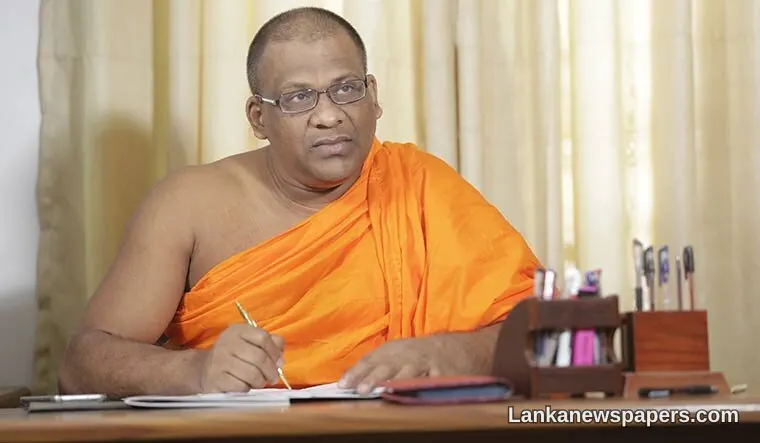
The Colombo High Court has upheld the nine-month prison sentence handed down by the Colombo Magistrate's Court against Bodu Bala Sena (BBS) General Secretary Galagoda Aththe Gnanasara Thera, affirming the lower court's ruling in a closely watched case that has drawn significant public attention across Sri Lanka.
Sentence Confirmed on Appeal
The High Court's decision came after an appeal was lodged challenging the original sentence imposed by the Colombo Magistrate's Court. The bench, having reviewed the proceedings and arguments presented, determined that the lower court's judgment was sound and that there were no sufficient grounds to overturn or reduce the sentence.
The ruling represents a significant moment in Sri Lanka's legal landscape, as Gnanasara Thera is one of the country's most prominent and controversial Buddhist monks, known for his outspoken and at times inflammatory public conduct.
Background to the Case
Gnanasara Thera, who leads the nationalist Buddhist organisation Bodu Bala Sena, has been a polarising figure in Sri Lankan public life for a number of years. The case against him stems from conduct that the courts found to be in violation of the law, resulting in the original custodial sentence being imposed at the magistrate level.
The confirmation of the sentence by the High Court signals that the judiciary is prepared to apply the rule of law consistently, regardless of the religious or public standing of the individuals before it.
Wider Implications
The verdict is expected to resonate strongly among civil society groups and minority communities in Sri Lanka, many of whom have long raised concerns about communal rhetoric and the conduct of certain nationalist figures operating under religious cover.
Legal observers have noted that the High Court's decision reinforces the principle that no individual is above the law, and that the appellate process functions as intended — not as a mechanism to escape accountability, but as a safeguard for justice.
Further developments in the matter are expected to be monitored closely by both legal analysts and the broader public in the days ahead.



💬 Join the Discussion 0
Be the first to share your view on this story.