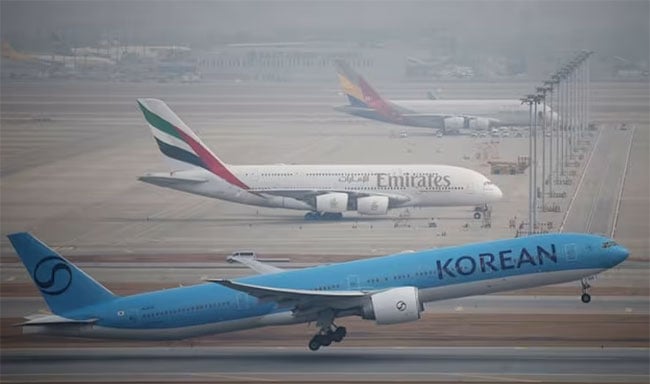
Airline stocks took a significant hit on Monday, and airfares spiked as the conflict between the U.S. and Israel against Iran led to rising oil prices. This situation raised concerns about a possible decline in travel and the risk of many flights being grounded. Oil prices surged over 15 percent, reaching heights not seen since 2022, as key oil producers reduced output and fears of extended shipping issues affected the market. At one point, Brent crude futures increased by as much as 29 percent. This situation adds pressure on airlines, which are already dealing with restricted airspace as travelers look to avoid the conflict in the Middle East. In Asia, airlines facing the brunt of investor worries included Korean Air Lines, which dropped 8.6 percent, Air New Zealand, which fell by 7.8 percent, and Hong Kong’s Cathay Pacific, which decreased by 5 percent. The rising ticket prices highlight the challenges for consumers. For instance, a direct flight from Seoul to London with Korean Air Lines on March 11 surged to $4,359, up from just $564 a week earlier, according to Google Flights data. Lorraine Tan, director of equity research for Asia at Morningstar, noted, “The problem for airlines is that demand for travel may drop as prices rise too high for leisure travelers, and some companies might limit business travel due to the uncertain situation.” Tan also mentioned that high airfares could restrict travel demand throughout much of 2026. In Europe, airlines such as Air France KLM, British Airways owner IAG, and Lufthansa saw declines between 4 percent and 6 percent in early trading, while major U.S. airlines were down about 4 percent before the market opened.
Business
Airline shares battered, airfares surge as Iran war intensifies