Buddhist Monks Take to the Streets: What Their Protest Means for Sri Lanka's Rule of Law and Economic Future
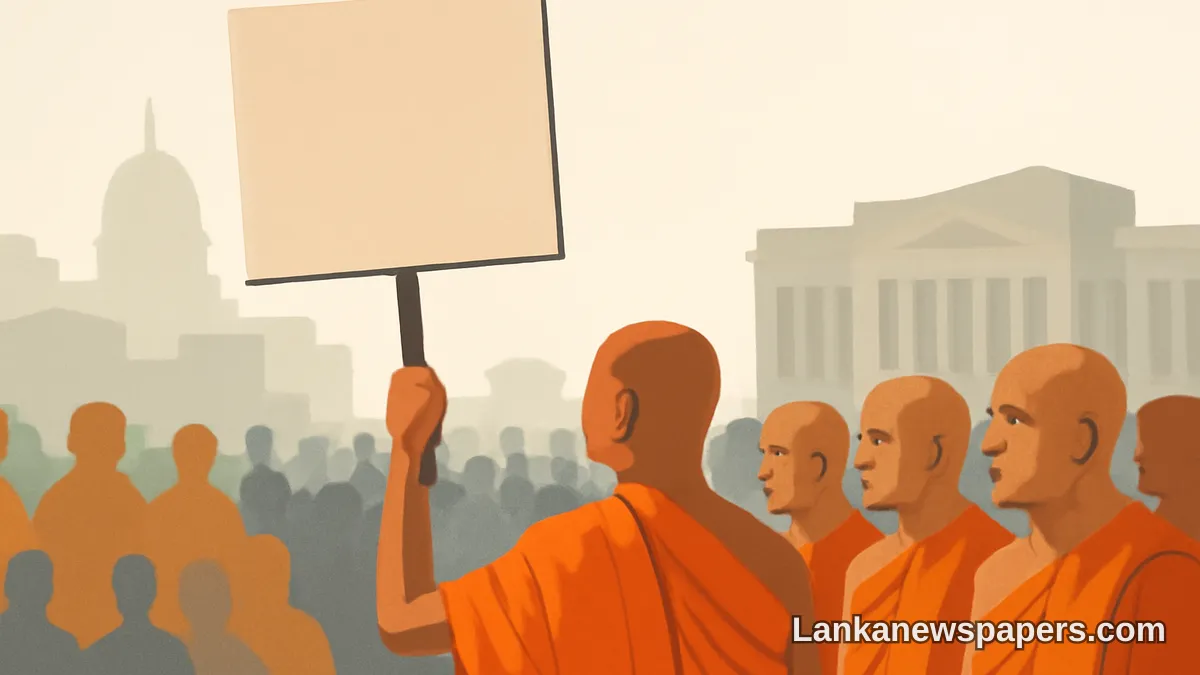
A wave of Buddhist monks descending on the streets of Sri Lanka has sparked fresh debate about the country's commitment to justice, institutional integrity, and its fragile economic recovery. The protest, led by members of the clergy — a group that has historically wielded enormous moral and political influence in Sri Lankan society — carries implications that stretch far beyond religious sentiment.
A Voice That Commands Attention
Buddhist monks in Sri Lanka are not merely spiritual leaders. Throughout the island's post-independence history, the sangha has repeatedly shaped the direction of governments, influenced electoral outcomes, and galvanised public opinion on matters of national importance. When monks march, politicians listen — and markets take note.
The current protest reflects deep-seated frustration among sections of the clergy and their supporters over what they perceive as failures in governance, accountability, and the equitable application of the law. Their grievances touch on issues that many ordinary Sri Lankans share, lending the movement a broader public resonance.
Rule of Law Under the Spotlight
At the heart of the monks' concerns lies a fundamental question about whether Sri Lanka's legal and judicial institutions are functioning impartially. Critics have long argued that powerful individuals — whether in business or politics — are able to evade accountability while ordinary citizens bear the full weight of the law.
For a country that is attempting to rebuild trust with international creditors and reform-minded institutions following its 2022 economic collapse, this perception of unequal justice is particularly damaging. Lenders and investors watch closely for signals that Sri Lanka is capable of sustaining meaningful institutional reform, not merely paper commitments.
- Selective enforcement of laws undermines public confidence in state institutions
- Lack of accountability for high-profile wrongdoing erodes social cohesion
- Perceived impunity discourages foreign investment and weakens reform credibility
Economic Consequences of Political Instability
Sri Lanka is currently navigating one of the most demanding economic rehabilitation programmes in its history, anchored by an International Monetary Fund bailout and a sweeping debt restructuring process. The programme demands not only fiscal discipline but also demonstrable progress on governance and anti-corruption measures.
Sustained street protests — particularly those led by figures with the moral authority of the Buddhist clergy — can send unsettling signals to international partners. They suggest that the social compact underpinning the reform agenda may be under strain, raising concerns about political continuity and implementation risk.
When those who command public trust take to the streets in protest, it is rarely dismissed as noise. It is read, both domestically and internationally, as a barometer of how deeply grievances have been allowed to fester.
A Test for the New Administration
The protest arrives at a critical juncture for the government of President Anura Kumara Dissanayake, which swept to power on a platform of systemic change and anti-corruption. The administration now faces the challenge of demonstrating that its promises of equal justice and clean governance are translating into concrete action — rather than remaining campaign rhetoric.
How the government responds to the monks' protest will be closely watched. A dismissive or heavy-handed reaction risks alienating a constituency with deep roots in Sinhalese Buddhist society. A constructive engagement, on the other hand, could demonstrate the kind of institutional maturity that both citizens and foreign partners are hoping to see.
The Broader Message
Ultimately, the protest by Buddhist monks is a reminder that economic recovery cannot be separated from questions of justice and governance. Sri Lankans who endured the hardships of 2022 — empty fuel queues, shortages of medicines, and soaring inflation — did so with the expectation that meaningful change would follow.
If those expectations continue to go unmet, dissent will grow — and it will not always arrive in the measured, peaceful form of a monks' march. For policymakers in Colombo, the clergy's message deserves to be read not as an inconvenience, but as an early warning worth heeding.


💬 Join the Discussion 4
See what readers are saying — and add your view.
what rule of law, we never had proper rule of law here men
every crisis in this country got monks involved, nothing new honestly
monks should focus on dharma not politics, this is getting too much
but who else will speak when goverment wont listen, tell me