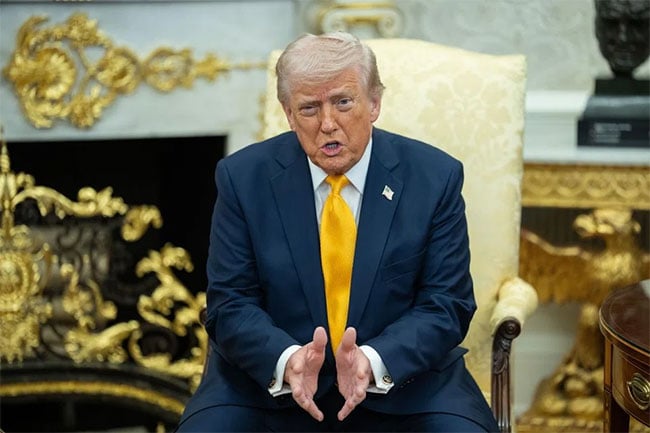
President Donald Trump has advised Israel against launching further attacks on Iran's natural gas infrastructure as retaliatory strikes on energy facilities have caused prices to soar, intensifying the U.S.-Israeli conflict with Iran. This ongoing struggle has resulted in the deaths of thousands and has affected neighboring countries and the global economy since the U.S. and Israel began their strikes on February 28, following failed negotiations over Tehran's nuclear program. On Thursday, energy prices surged after Iran retaliated against an Israeli strike on a significant gas field by targeting Qatar's Ras Laffan Industrial City, a site responsible for processing about 20% of the world's liquefied natural gas, leading to damage that may take years to fix. Additionally, Saudi Arabia's main port on the Red Sea, which has managed to reroute some of its exports to sidestep Iran's blockade of the Strait of Hormuz, was also struck. These attacks highlight Iran's capability to inflict significant damage in response to the U.S.-Israeli operations and reveal the limitations of air defenses in safeguarding critical energy assets in the Gulf. With rising fuel prices posing a risk to his electoral base ahead of the midterm elections in November, Trump has criticized allies who have been slow to respond to his calls for assistance in securing the Strait of Hormuz, through which about 20% of the world's oil is transported. Trump stated that he has communicated to Israeli Prime Minister Benjamin Netanyahu to avoid further attacks on energy infrastructure. “I told him, ‘Don’t do that,’ and he won’t do that,” Trump told reporters in the Oval Office on Thursday. A U.S. official, along with three others familiar with the situation, informed Reuters that Trump is contemplating the deployment of thousands more U.S. troops to the Middle East.
Business
Trump tells Israel not to repeat strikes on Iranian energy as crisis deepens