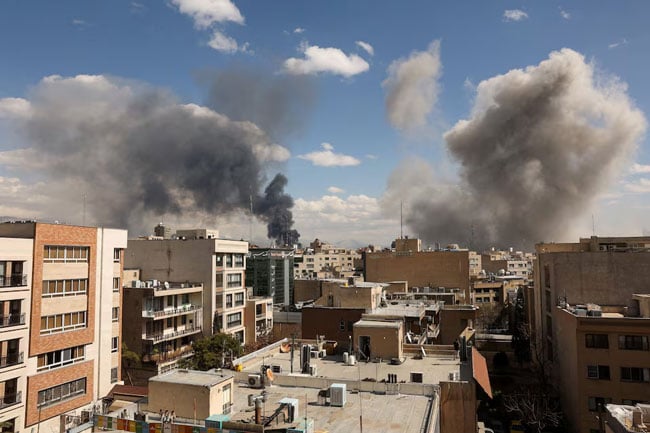
Israel carried out more airstrikes on Tehran on Sunday, and Iran responded with missile attacks. This escalation followed the death of Supreme Leader Ali Khamenei, creating more uncertainty in the Middle East and affecting the global economy. The strikes by the U.S. and Israel, along with Iran's retaliation, caused significant alarms worldwide, impacting industries such as shipping, air travel, and oil. There are warnings about increasing energy prices and potential disruptions in business across the Gulf region. The Israeli military reported that it intercepted missiles fired from Lebanon early Monday, which may indicate that Hezbollah, a major ally of Iran, is becoming involved in the conflict. U.S. President Donald Trump stated that the attacks aimed to prevent Iran from developing nuclear weapons, control its missile capabilities, and eliminate threats to the U.S. and its allies. According to the U.S. Central Command, over 1,000 Iranian targets have been struck since the campaign began. In a video message shared on his Truth Social platform, Trump declared that military operations would persist until "all our objectives are achieved." He claimed the strikes had devastated Iran's military leadership and destroyed nine Iranian navy vessels and a naval facility. Trump urged the Iranian military and police to surrender, offering safety for those who comply while warning of "certain death" for those who oppose. He also called on the Iranian people to rise against their government, saying, "I call upon all Iranian patriots who yearn for freedom to seize this moment, to be brave, be bold, be heroic and take back your country. America is with you." Earlier, Trump told the Atlantic magazine that Iran's leaders expressed interest in discussing matters with him, which he agreed to. In another interview with the Daily Mail, he mentioned that the military actions against Iran might continue for another four weeks.
Business
Israel hits Tehran again after killing Khamenei, leadership council takes over