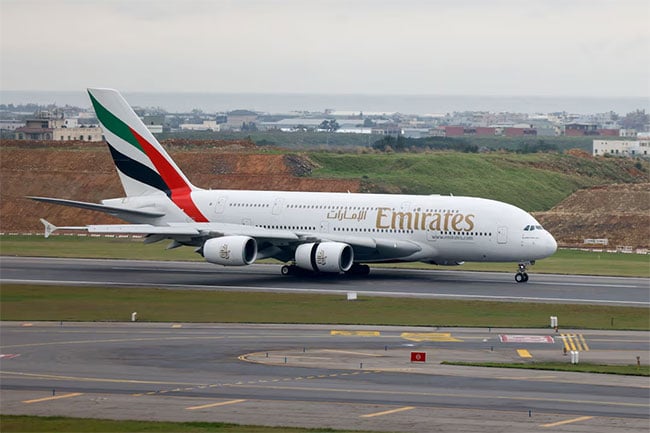
Emirates and Etihad Airways are restarting a limited number of flights to major cities around the world from their bases in the United Arab Emirates as of Friday. However, the risk of missile strikes is adding pressure on airlines trying to help travelers. Since the beginning of the U.S.-Israel conflict with Iran, most airspace in the Middle East has been closed due to concerns about missiles and drones. Authorities are organizing charter flights and booking seats on limited commercial services to evacuate tens of thousands of people. On Thursday, a government-chartered Air France flight meant to bring French citizens back from the UAE had to turn around because of missile activity in the area, as stated by French Transport Minister Philippe Tabarot. He remarked, “This situation shows the instability in the region and the complexity of repatriation efforts.” On Friday, Britain’s first repatriation flight from Oman arrived at London’s Stansted Airport after being delayed due to boarding issues. Etihad, based in Abu Dhabi, announced it would resume a limited schedule of flights through March 19. These flights will connect Abu Dhabi to around 70 destinations, including London, Paris, Frankfurt, Delhi, New York, Toronto, and Tel Aviv. According to flight-tracking site Flightradar24, traffic at Dubai airport, which is usually the busiest in the world, nearly doubled from Wednesday but still only reached about 25% of normal levels by Thursday. Emirates, based in Dubai, announced late Thursday that it would maintain a reduced schedule to 82 destinations, including London, Sydney, Singapore, and New York, until further notice. Passengers transiting through Dubai will only be accepted if their next flight is operating. The limited operations at Middle Eastern hubs have particularly affected travelers on flights from Europe to the Asia-Pacific region, including those in Sri Lanka.
Politics
Gulf carriers resume limited flights, but missile fire fuels uncertainty