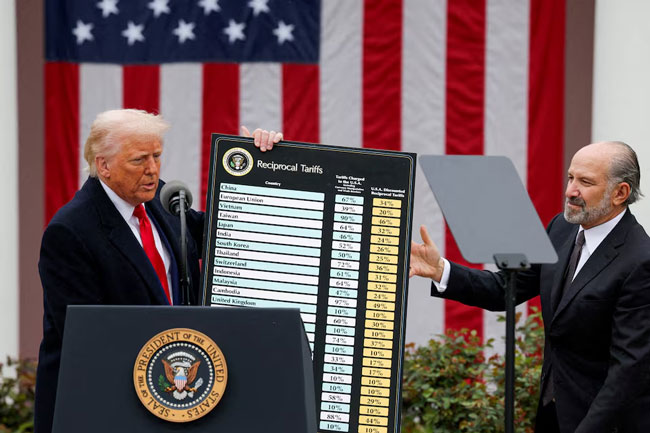
President Donald Trump has introduced temporary 15% tariffs to replace those recently invalidated by the U.S. Supreme Court. These tariffs aim to address a concern that numerous economists argue is non-existent: a balance of payments crisis in the U.S. This situation may expose the new tariffs to further legal challenges. Just hours after the Supreme Court overturned a significant number of tariffs Trump had enacted under the International Emergency Economic Powers Act, he announced these new duties under Section 122 of the Trade Act of 1974—a statute that his legal advisors previously deemed irrelevant. The collection of these new 15% tariffs started at midnight on Tuesday, halting the previous tariffs which ranged from 10% to 50%. The Section 122 law permits the president to impose tariffs of up to 15% for a maximum of 150 days on all countries to tackle “large and serious” balance-of-payments deficits and “fundamental international payments problems.” Trump's tariff order claimed that a significant balance of payments deficit was present, highlighted by a $1.2 trillion annual goods trade deficit and a current account deficit equal to 4% of GDP, along with a reversal of the U.S. primary income surplus. Some economists, such as former International Monetary Fund First Deputy Managing Director Gita Gopinath, contested the Trump administration’s urgent claims. Gopinath stated to Reuters, “We can all agree that the U.S. is not facing a balance of payment crisis, which occurs when countries see a huge rise in international borrowing costs and lose access to financial markets.” She dismissed the White House's assertion that a negative balance in U.S. primary income for the first time since 1960 indicated a severe balance of payment issue. Gopinath linked the negative balance to a significant increase in foreign investments in U.S. stocks and risky assets over the last decade, which outperformed foreign stocks during that time.
Business
Trump s new tariffs shift focus to balance of payments; economists see no crisis