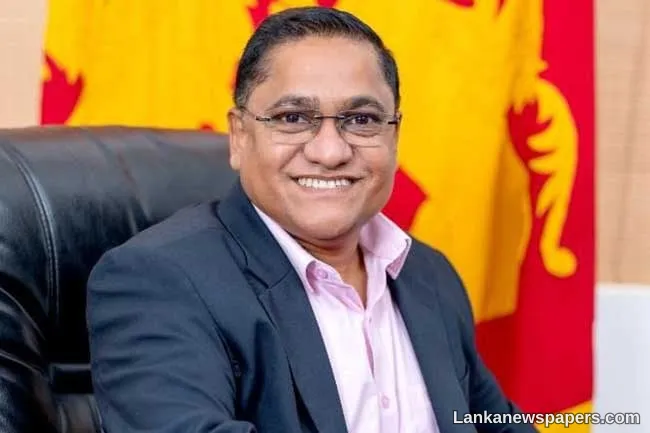
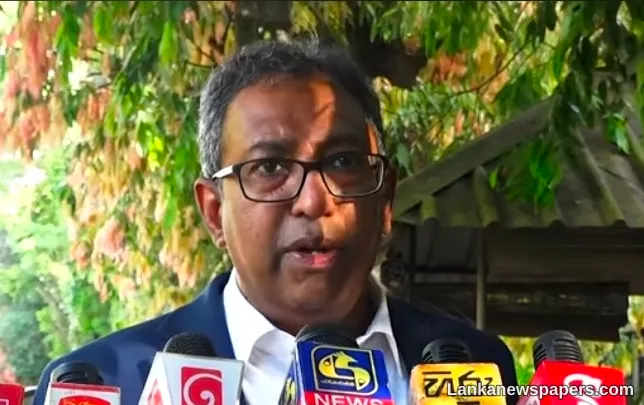
Sri Lanka's Foreign Minister, Vijitha Herath, stated that upgrading the oil tank farms from World War II in the Trincomalee district is the “permanent solution” to the country’s energy crisis. He mentioned that the government is working to speed up this project, which has support from India and the United Arab Emirates. "We can't rely on temporary fixes; we need a long-term plan for oil storage and distribution due to the global energy situation," Herath told The Hindu on Saturday, echoing his earlier remarks in Parliament. He pointed out that the government signed a Memorandum of Understanding (MoU) with India and the UAE at the beginning, referring to the agreement made in April 2025 during Prime Minister Narendra Modi's visit to Sri Lanka, aimed at turning Trincomalee into an energy hub. This agreement has gained attention as one of the first significant MoUs related to strategic projects, signed by the Anura Kumara Dissanayake administration after its victory in the November 2025 elections. The move is seen as a notable change, especially since the leftist party, Janatha Vimukthi Peramuna (JVP), which is part of the ruling National People’s Power, has historically opposed Indian involvement in this project. Since the MoU was signed nearly a year ago, the three parties have met only once, and Sri Lanka has submitted a concept note for India and UAE to respond to, according to sources familiar with the talks. “The Energy Ministry is addressing some technical details. After that, we will start a tender process to attract investors,” Herath explained, adding that the government is eager to “speed up the process.” For over forty years, since the Indo-Lanka Accord of 1987, New Delhi has been in discussions about redeveloping the strategically important oil tank farms with various Sri Lankan governments, but progress has been slow. The current energy crisis, which could greatly affect global supply chains and economies, has brought renewed attention to this long-debated project. Although Sri Lanka does not get its fuel from the Strait of Hormuz, relying instead on sources from India, Malaysia, South Korea, and Singapore, the closure of the strait has impacted global supply, Minister Herath informed Parliament last week. “When situations like this arise, the entire country faces the consequences. We are experiencing that now,” he said, discussing Sri Lanka’s approach to the crisis in West Asia, including the country’s decision to deny requests from both the U.S. for access to its warplanes and Iran for port visits for its ships. As tensions escalated in West Asia due to attacks involving the U.S. and Israel on Iran and its subsequent retaliation, Sri Lanka introduced a digital QR code system last week to manage fuel sales, which officials described as a “precautionary measure.”


💬 Join the Discussion 0
Be the first to share your view on this story.