Business
Adani s Colombo Terminal handles over 1 million containers in first year
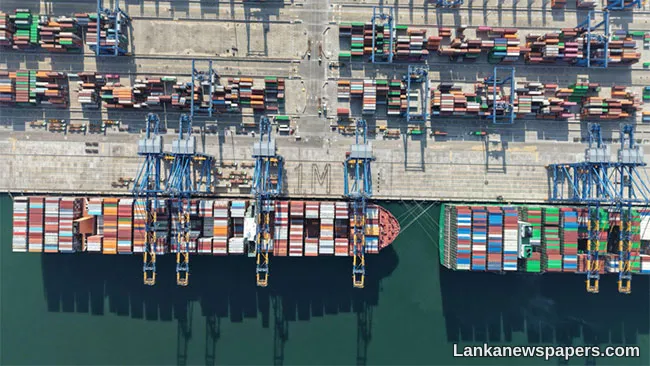
Adani Ports and Special Economic Zone Ltd (APSEZ) has celebrated a successful first year at the Colombo West International Terminal (CWIT) in Sri Lanka, which has handled over one million containers. This achievement, reported by APSEZ, marks a significant milestone for the terminal, which began operations in April 2025. It is the fastest ramp-up seen at the Port of Colombo, placing CWIT among a few global terminals to reach such a scale within its first year. The CWIT is a joint venture involving Adani Ports, which manages nearly 45 percent of India's container cargo, John Keells Holdings PLC, a respected company in Sri Lanka, and the Sri Lanka Ports Authority. The terminal represents a major investment of around $800 million, one of the largest commitments to port infrastructure in Sri Lanka in recent years. This milestone occurs as Colombo strengthens its position as a vital transshipment hub, facilitating cargo movement across Asia, the Middle East, and Europe. Its strategic location near a major east-west shipping route makes it a favored stop for large vessels and feeder services. Typically, container terminals take years to stabilize and increase their operations. However, CWIT's early success can be attributed to effective partnerships with shipping companies, high berth productivity, and the benefits of operating within an established transshipment framework. While larger ports generally expand in phases, CWIT's performance is notable, especially compared to newer automated terminals in Europe and East Asia that take longer to achieve similar levels of operation. As the first fully automated deep-water terminal at the Port of Colombo, CWIT is equipped to accommodate the latest ultra-large container ships. With a quay length of 1,400 meters and a depth of about 20 meters, it can accommodate some of the largest vessels in the Asia-Europe trade. The terminal can handle around 3.2 million TEUs annually, significantly boosting Colombo's capacity. The use of modern technology, including digitally integrated systems, advanced cranes, and electrified yard equipment, aims to reduce turnaround times and enhance operational efficiency. This aligns with global trends where ports are increasingly investing in automation and energy-efficient systems to improve productivity while minimizing environmental impact. The strong early performance of the terminal underscores Colombo's crucial role in global shipping, with a large portion of its cargo being transshipment linked to India, making efficiency and connectivity vital for ongoing growth.



💬 Join the Discussion 0
Be the first to share your view on this story.