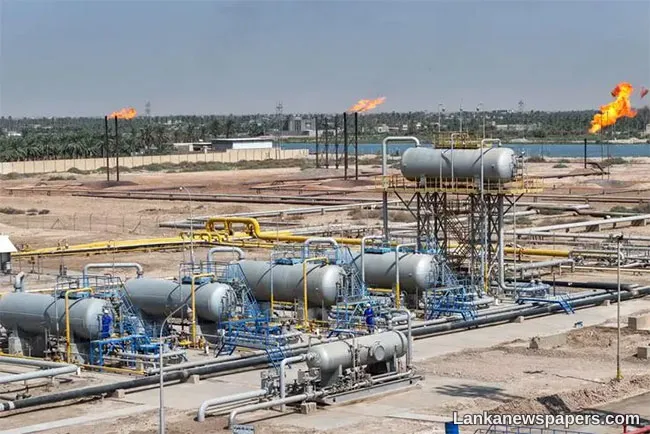
Oil prices fell on Wednesday, reducing some of the significant gains made on Tuesday. This drop came after the Iraqi government and Kurdish authorities agreed to restart oil exports through Turkey’s Ceyhan port, which eased some worries about oil supplies from the Middle East. However, the ongoing conflict with Iran has halted most oil exports from the region, keeping Brent crude prices above $100 per barrel for four straight days. After climbing more than 3% on Tuesday, Brent futures decreased by 67 cents, or 0.65%, to $102.75 a barrel by 0209 GMT on Wednesday. Meanwhile, U.S. West Texas Intermediate crude fell by $1.18, or 1.23%, to $95.03. Iraq’s oil minister, Hayan Abdel-Ghani, stated that oil exports from Ceyhan were expected to begin at 0700 GMT on Wednesday, as reported by state media. Last week, two oil officials mentioned that Iraq aimed to pump at least 100,000 barrels per day through the port. Tony Sycamore, an analyst at IG, noted that while this development is helpful, the 100,000 bpd increase is not significant, considering Iraq has lost around two million barrels per day. Oil production in Iraq’s main southern fields, where most oil is produced and exported, has dropped 70% to only 1.3 million bpd, according to sources on March 8. This decline is due to the Iran conflict, which has effectively closed the crucial Strait of Hormuz, a route for about 20% of the world’s oil. On Tuesday, Iran confirmed that its security chief, Ali Larijani, was killed in an Israeli attack, marking the highest-ranking official targeted since the start of the U.S.-Israeli conflict. A senior Iranian official reported that the new supreme leader of Iran has turned down de-escalation proposals from intermediary countries. The U.S. military stated on Tuesday that it had struck sites along Iran’s coastline near the Strait of Hormuz due to the threat posed by Iranian anti-ship missiles to international shipping. The death of Larijani and the U.S. military actions in the region have raised some hopes for a quicker resolution to the conflict, according to Mingyu Gao, chief researcher for energy and chemicals at China Futures.



💬 Join the Discussion 0
Be the first to share your view on this story.