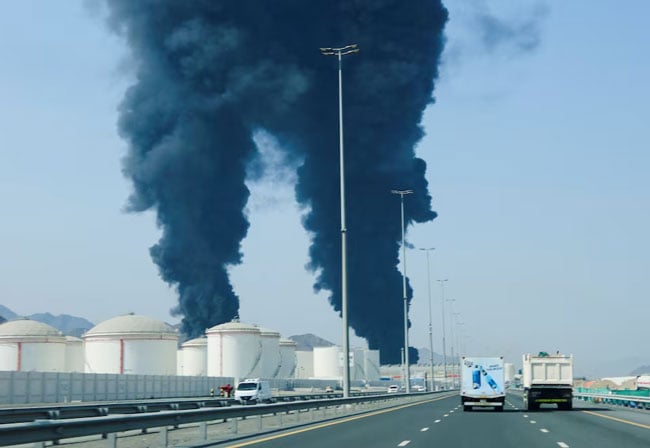
Gulf Arab nations are not asking the U.S. to engage in war with Iran, but many are now urging the country not to stop until Iran can no longer threaten the Gulf's vital oil supply and the economies that rely on it, according to three sources from the Gulf who spoke to Reuters. At the same time, these sources and five diplomats from Western and Arab nations mentioned that Washington is encouraging Gulf countries to support the U.S.-Israeli conflict. Three of these diplomats noted that President Donald Trump aims to demonstrate regional support for the campaign to strengthen its legitimacy internationally and gain domestic backing. Abdulaziz Sager, chairman of the Saudi-based Gulf Research Center, expressed that there is a strong sentiment across the Gulf that Iran has violated all boundaries with each Gulf nation. He stated, “Initially, we defended them and opposed military action. But when they started attacking us, they became our enemy. There is no other way to see them.” Iran has already shown its capability by attacking airports, ports, oil facilities, and commercial centers in the six Gulf states using missiles and drones. These actions have disrupted shipping in the Strait of Hormuz, a crucial route that carries about 20% of the world's oil and supports Gulf economies. The attacks have heightened Gulf concerns that allowing Iran to maintain significant offensive weapons or arms production could empower it to threaten the region's energy supplies whenever tensions rise. As the conflict enters its third week, with U.S. and Israeli airstrikes increasing and Iran targeting U.S. bases and civilian areas throughout the Gulf, a Gulf source reported that leaders are clear in their belief: Trump should significantly reduce Iran’s military strength. The source warned that without severely weakening Iran, the region would continue to live under constant threat.
Politics
Gulf states press US to neutralise Iran for good as Hormuz crisis deepens – report