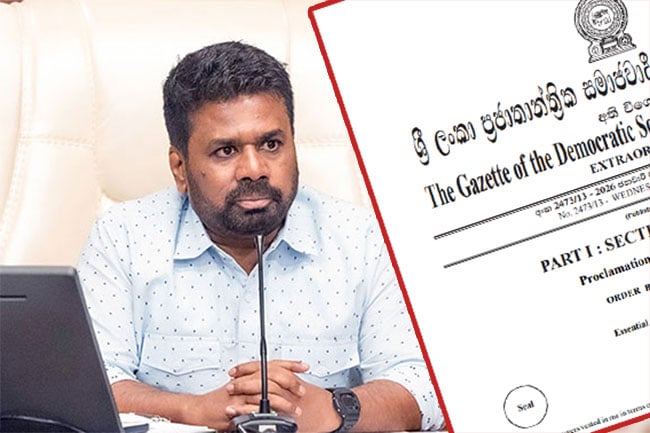
President Anura Kumara Dissanayake has released a special gazette that continues the classification of several services, including electricity and fuel supply, as essential. He used his authority under Section 2 of the Essential Public Services Act, No. 61 of 1979, to issue this gazette. This action aims to ensure that services remain uninterrupted following the damage caused by Cyclone Ditwah. The services recognized as essential include: 1. All services related to electricity supply. 2. The distribution of fuel, which includes petroleum products and gas. 3. Any necessary work or labor for the care, treatment, and maintenance of patients in hospitals, nursing homes, dispensaries, and similar facilities. 4. Public transport services for moving passengers and goods. 5. Maintenance and facilitation of transportation and tourism services by road, rail, or air, covering highways, bridges, culverts, airports, ports, and railways. 6. All water supply and drainage services. 7. Services for supplying, safeguarding, and distributing food and essential goods. 8. Various services, works, or labor contributions required from District Secretariats, Divisional Secretariats, Grama Niladharis, Samurdhi Development Officers, Agricultural Research Assistants, Community Empowerment Officers, and all other field officers at the District and Divisional Secretariats. 9. Ambulance services. 10. All banking and insurance services by the government, including those from the Central Bank of Sri Lanka. 11. Services provided by Local Authorities for the supply of water, electricity, drainage and sewerage systems, firefighting, ambulance services, waste collection, and garbage disposal (including the handling of human waste). 12. All irrigation services. 13. All services related to telephone, telecommunications, and media. 14. Services for reclaiming and developing low-lying lands. 15. All agricultural services and agricultural insurance. This declaration is crucial for maintaining stability in Sri Lanka during this challenging time.
Politics
Gazette issued extending declaration of several services including electricity supply as essential service