Business
Hambantota Port expands capacity as Middle East crisis drives surge in shipping volumes
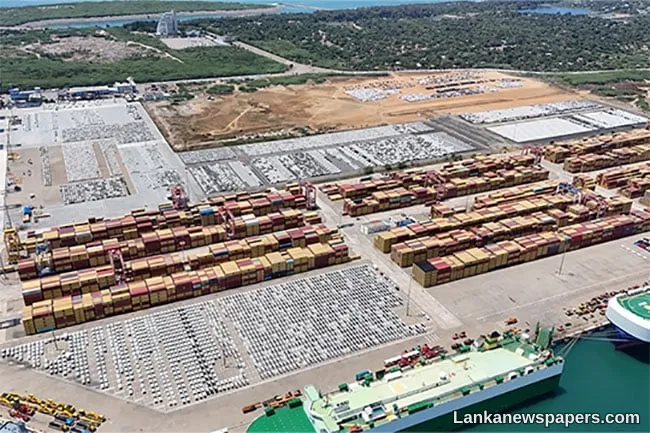
The Hambantota International Port (HIP) in Sri Lanka has greatly increased its capacity due to a rise in global shipping volumes caused by the ongoing crisis in the Middle East. This expansion strengthens HIP's role as an important alternative hub on the East-West shipping route. The port has doubled its Roll-on/Roll-off (RoRo) yard capacity and boosted its container yard capacity by 30%. Shipping companies are rerouting away from the troubled Middle Eastern routes to find more stable and efficient options. Wilson Qu, CEO of HIP, commented, “We are seeing a major shift in global shipping patterns. At HIP, we focus on increasing our capacity and flexibility to adapt to these changes. Our quick scaling ability, along with our location, helps us support global shipping lines when reliability is essential. In the future, we will keep investing in our infrastructure and capabilities to enhance Hambantota's role as a crucial logistics and transshipment hub in the region.” The increase in vehicle transshipment and container volumes has pushed yard usage at Hambantota International Port to its highest levels ever, showing the extent of current supply chain disruptions and the port’s growing significance in global trade. To handle the added volume, HIP has quickly expanded yard space for both cargo types, allowing it to manage higher traffic while keeping operations efficient and reducing congestion. Port officials note that the increase in activity is due to HIP's strategic location, just 10 nautical miles from the main East-West shipping lane, enabling ships to change course with minimal delay while staying on schedule.



💬 Join the Discussion 0
Be the first to share your view on this story.