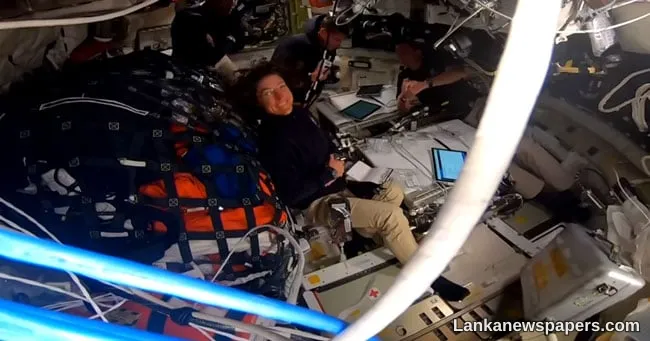
NASA's Artemis II mission made history on Monday as its four astronauts traveled to the farthest point in space ever reached by humans. They were pulled by the moon's gravity as they headed for a rare crewed flyby of the dark side of the moon. In a room next to mission control at NASA’s Johnson Space Center in Houston, about twenty lunar scientists gathered to document the astronauts’ first live observations of the moon's surface. The Artemis II crew, aboard their Orion capsule since launching from Florida last week, started their sixth day in space. They woke up at approximately 10:50 a.m. ET (1450 GMT) to a recorded message from the late NASA astronaut Jim Lovell, who was part of the Apollo 8 and Apollo 13 missions during the Cold War. Lovell, who passed away last year at age 97, welcomed them by saying, “Welcome to my old neighborhood. It’s a historic day, and I know how busy you’ll be, but don’t forget to enjoy the view... good luck and Godspeed." On that same day, the Artemis astronauts set a new spaceflight record. They surpassed the previous record distance of 248,000 miles (400,000 km) from Earth, which was set in 1970 by Apollo 13. That mission faced a serious malfunction that nearly ended in disaster, but Lovell and his crewmates used the moon’s gravity to safely return to Earth. Later on Monday, the Artemis crew, consisting of U.S. astronauts Reid Wiseman, Victor Glover, Christina Koch, and Canadian astronaut Jeremy Hansen, reached their own maximum distance from Earth of 252,755 miles, breaking the Apollo 13 record by 4,117 miles. During their journey, the Artemis crew also took time to give new temporary names to lunar features that had not been officially named before.



💬 Join the Discussion 0
Be the first to share your view on this story.