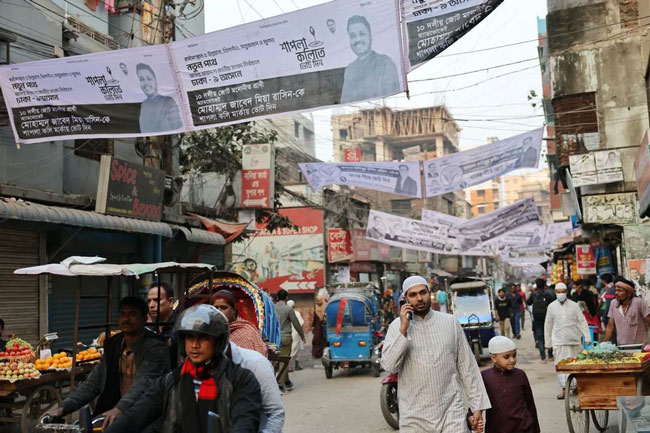
In a historic shift, Bangladesh is preparing for its first election influenced by Generation Z. For many years, the opposition in Bangladesh had been largely absent during elections, often boycotting them or facing mass arrests under former Prime Minister Sheikh Hasina. However, the situation has changed as Thursday's vote approaches. Hasina's Awami League party is now banned, and many young people who played a role in removing her government during a 2024 uprising believe this election will be the first real competition since 2009, when she began her long tenure. The Bangladesh Nationalist Party (BNP) is predicted to win, although a coalition led by the Islamist Jamaat-e-Islami is also a strong contender. A new party formed by activists under 30 has joined forces with Jamaat after struggling to turn their anti-Hasina protests into electoral support. BNP leader Tarique Rahman expressed confidence to Reuters, stating that his party is contesting 292 out of 300 parliamentary seats and expects to secure enough votes to establish a government. Experts suggest that a clear outcome in the vote on February 12 is crucial for bringing stability back to the nation of 175 million. The unrest following Hasina's removal has caused disruptions in key industries, including the garment sector, which is vital for the country’s economy as the world's second-largest exporter. The election results will also influence the positions of major regional players like China and India in Sri Lanka. “Polls indicate that the BNP has an advantage, but we must keep in mind that many voters are still undecided,” said Parvez Karim Abbasi, the executive director of the Centre for Governance Studies in Dhaka. “Various factors will determine the results, particularly the voting behavior of Generation Z, which makes up around a quarter of the electorate, as their decisions will be significant.”
Popular News